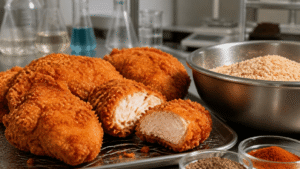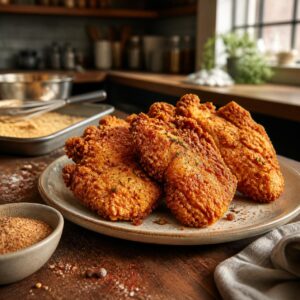

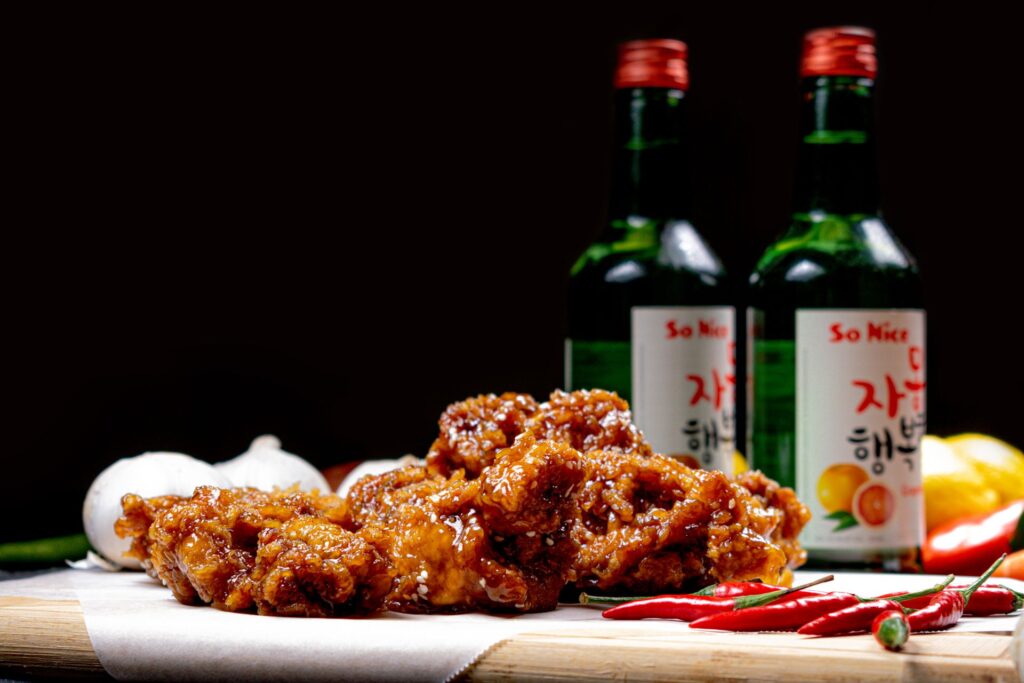
Starches, thin coatings, and double-frying are the main components of Korean fried chicken breading. The chicken breading consistency for this fry is a formulation choice as much as a kitchen habit. If you want consistent fried chicken breading across a franchise system, you have to spell those differences out for your breading supplier instead of assuming “Korean-style” is just another flavor.
Why Korean Coating Crunches Differently
The batter for Korean fried chicken is much thinner and starchier than that of classic American fried chicken, which relies on wheat flour and a thicker coating. Potato or corn starch forms a tight, almost glazed shell around the meat, creating a crisp, almost wafer-thin coating with a crunch entirely different from a Southern-style, flour-based crunch.
Why this works:
That structure matters for the consistency of chicken breading because the starch shell behaves more like glass than bread. Once you perfect that shell with the right batter solids and starch ratio, you get a predictable crack even when you add sauce to the product.
Double Frying and Thin Shell Engineering
Most Korean fried chicken recipes call for a double fry: first at a lower temperature to cook the meat and set the shell, then again at a higher temperature to minimize moisture and harden the surface. That second fry is what gives the coating its rigid, shatter-crisp texture, despite being very thin.
When it comes to specification, your breading and batter have to withstand two fryer sessions without burning, breaking, or becoming too oily. We always advise kitchen staff that oil uptake, color development, and the type of starch all need to follow that profile if you want consistent fried chicken breading across several stores and locations.
Starch Choice and Breading Performance
Korean fried chicken usually comes with a potato starch coating base, occasionally blended with a small amount of low-gluten wheat flour or tempura mix. Cornstarch is a common substitute, but it does not behave the same way with regard to brittleness and browning.
These starches quickly gelatinize and form a dense, moisture-resistant coating. That’s why “K-style” wings can stay crisp even after being tossed in sauce. If you specify flour-first formulas to a franchise breading supplier, you’ll get a softer, breadier crust—appropriate for Southern profiles but not for a Korean shell.
Batter vs. Dry Breading in K-Style Systems
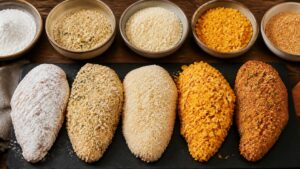
Traditional American fried chicken depends mostly on dry breading, with buttermilk or egg as the wet step. Korean fried chicken, on the other hand, often uses a wet batter made with starch, water, or beer, and sprinkled with seasonings. Some kitchens mix approaches: a light marinade, a starch-rich dredge, and just enough moisture to clump the starch onto the chicken before the first fry.
For consistent chicken breading, your coating spec may need to include a batter and a dry component, not just a single blend. If your franchise breading supplier doesn’t understand that full system, they may focus on the dry blend only and miss the Korean texture you expect.
How Sauce Changes the Coating Requirements
American fried chicken is often served dry or with sauce on the side. In contrast, Korean fried chicken is usually finished in a sticky glaze. That glaze adds water activity and sugar, both of which attack crunch if the shell isn’t strong enough.
A proprietary Korean-style formula demands greater focus on film strength, oil management, and sugar tolerance to prevent the shell from collapsing during coating. Here is also where real-world testing—double-fry, sauce, hold—must reflect actual service if you want consistent fried-chicken breading rather than a one-off chef recipe.
Specifying Korean Breading to a Franchise Supplier
If you want consistent Korean-style chicken breading across multiple locations, your spec needs to go beyond “Korean flavor.” At a minimum, you should define:
- Target starch system (for example, potato starch–forward with a defined flour percentage).
- Batter solids level and viscosity range to keep coatings thin and repeatable in store.
- Approved double-fry temperature bands and times, including recovery expectations for fryers.
- Sauce type, solids, and application window (time from second fry to saucing and serving).
- Color and texture benchmarks, including acceptable variation, so QA teams can score products consistently.
Embedding those parameters in your franchise agreement with a franchise bread supplier makes chicken breading consistency measurable rather than subjective. Without that detail, operators improvise with local batters, oils, and sauces, and you end up with a different “Korean fried chicken” in every region.
How a Custom Manufacturer Locks in Korean Texture
A custom chicken breading manufacturer can develop a proprietary K-style system tailored to your fryers, oil, and hold times, rather than pulling a generic “Asian” coating off the shelf. That includes tuning the starch blend, batter structure, and particle size so crunch holds from the first fry through delivery and saucing.
Because Idan Foods operates as a custom co-manufacturer and private-label dry-blending partner, we can lock in that proprietary Korean formula, produce it at scale, and manage QA across franchise accounts. For a chain that wants a Korean signature item, that’s the difference between a one-store hit and a system-wide standard your customers can recognize in every market.