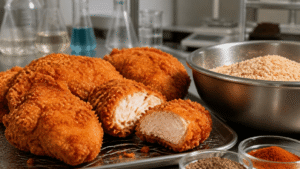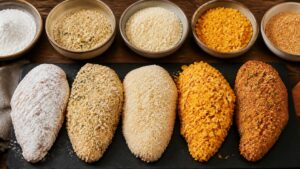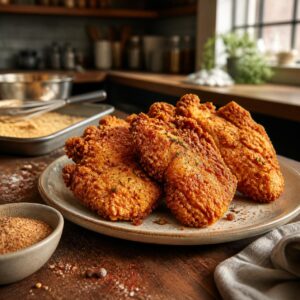

Breading inconsistencies quietly blow holes in your franchise P&L, but they rarely show up as a single line item. The damage is spread across the operation: food waste inches up, managers lose hours dealing with complaints, online reviews scare off new guests, and regulars stop coming as often. Over time, those pressures stack up into margin erosion that feels vague and hard to pin down. The cause and effect are often separated by weeks or months, especially when you’re considering multiple locations rather than a single store’s daily log.
Most operators blame the breading supplier when quality goes sideways. Yet, very few sit down and work out what that inconsistency actually costs. Extra waste is buried in the “normal” food cost variance. Time spent on complaints is lost in broad labor numbers. Lost repeat guests are written off as a marketing or traffic problem. The first real step toward fixing it is to surface where those costs are hiding and put numbers to them, so you can make a clear business case for moving to a locked custom formula.
Inconsistency on the P&L
Typical food waste rates for QSR and fast-casual restaurants vary from 3% to 8% of food purchased. Breading quality issues that lead to remakes appear as cost of goods sold increases. Breading waste can be from improper adherence or when remakes are necessary for texture reasons. Across an entire franchise, these breading-specific problems add up to large increases in cost of goods sold.
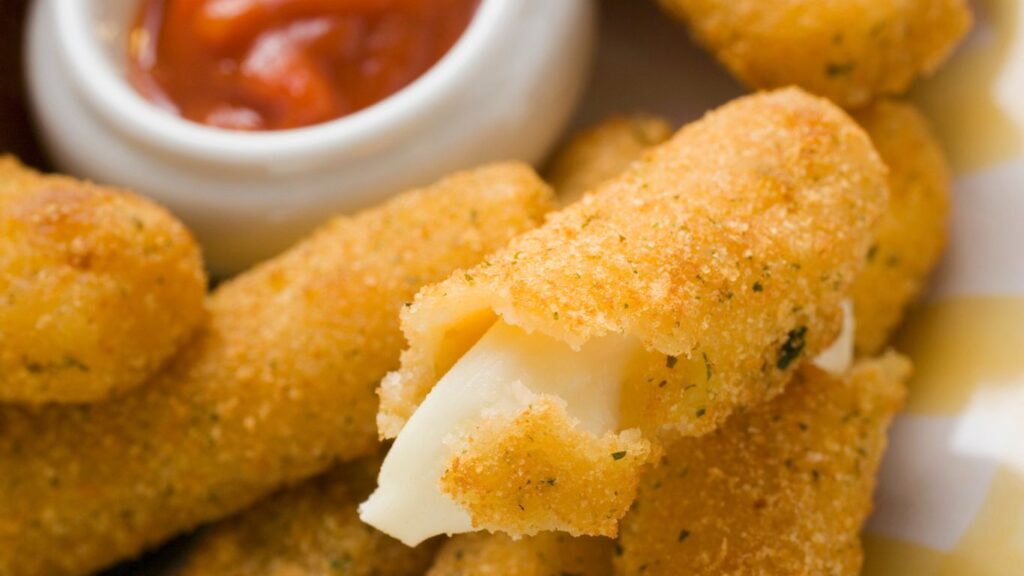
Remakes in high-volume service increase costs. Each dish that needs to be replaced because the coating or breading is soggy or has fallen off needs new product. It also means extra time and stress on staff running the fryers during peak demand. This not only costs money in products but also eats up precious kitchen time that could be spent on profitable orders and causes backups in the rest of the queue. Complaints are costly in and of themselves, beyond the cost of the comped meal or discounted check.
The cost of a straightforward frontline complaint is around $5. A complaint that needs investigation can cost hundreds or thousands of dollars. For franchises, this can translate to the manager’s time to handle the complaint, write up the incident for corporate, and follow up with the guest.
Food waste as a percentage of food sold is more important than tonnage. A 4% increase in purchased food waste (from 4% to 6%) due to inconsistent breading can cost a restaurant with annual sales of $1.2 million $24,000 in food waste. Multiply that by 20 locations, and food wasted due to breading inconsistency alone can exceed $480,000 a year.
Costs Operators Often Overlook
The time employees spend problem-solving inconsistent breading performance isn’t a line item on the P&L. It’s tallied as management time at an hourly rate. When general managers troubleshoot why breading fails to stick at Location 8 and browns too fast at Location 3, they’re not focusing on staff training, community marketing or customer service.
Restaurant staff turnover costs average $5,864 per person. Turnover in restaurants is over 75% per year in 2026, and quality issues add to the turnover rate. When line cooks follow a recipe and get different outcomes due to differences in supplier formulation, they become frustrated. They leave. They move to jobs where they are assured of consistent results.
Franchise costs increase when attempts are made to correct formulation issues with “technique”. Coaching, videos, and new procedures increase production costs. It also stresses deployment and the labor required in retraining. The training effort is wasted if the problem is batch-to-batch variability in particle size, moisture content or starch type. Supply chain management is complicated when process operators cannot rely on suppliers’ consistency.
Safety stock builds up. Expedited shipments to replace out-of-spec material increase shipping expenses. Arguments about who’s to blame for poor quality consume the purchasing department. These bureaucratic expenses and capital waste are often not traced back to the true culprit: variable breading formulation.
The Review Problem
Customer reviews are the first taste of a dining experience. Critical reviews of food quality, texture, or consistency appear in Google searches and on websites where potential customers decide where to dine. For franchises, quality problems at one site impact the entire system. Guests always perceive inconsistencies at one franchise location as a problem throughout the system.
In fact, only 25% of dissatisfied customers voice their complaints to restaurant management. The other 75% never come back and may leave bad reviews online. That means, for every complaint lodged directly with a manager, three other unhappy customers have left without giving the business a chance to resolve the issue. The quickest way to bleed profit from a franchise system is to lose regular customers. Burgers, pizza, and fast-casual restaurants depend on regular visitors, not trial customers.
If you serve them a few substandard meals because of inconsistent quality, they don’t always complain—they simply visit less often or defect to a competitor down the street. Do the maths: a regular who typically visits twice a month, and spends about $15 per visit, represents $360 in revenue each year. Multiply the loss of 20 of these regulars per store across a 15-store franchise, and you’re talking about more than $100,000 of top-line revenue lost every year. Not to mention the flow-on effects on scheduling, purchasing, and profitability. Acquisition costs make this hurt even more.
Each time quality issues drive a new customer away after their first or second visit, you lose the money you invested to get them through the door. You paid for the advertising, promotions, or online marketing to bring them in; poor quality is what prevents that customer acquisition from generating repeat revenue.
What a Locked Formula Actually Saves You
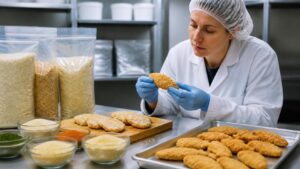
A locked custom breading formula from a dedicated manufacturer eliminates batch-to-batch variation by controlling the specifications that affect performance. Starch ratio, particle size distribution, seasoning uniformity, and moisture content remain consistent across every production run. This stability removes the quality variables that create waste, drive complaints, and undermine customer retention.
Start the ROI calculation by:
- Quantifying your current costs due to bread inconsistency.
- Tracking the percentage of food waste for breaded items over a 90‑day period.
- Documenting how often breaded items are remade and how many labor hours managers spend handling breading-related complaints.
- Counting how many negative reviews mention texture, coating, or overall quality issues.
After estimating the revenue lost when disappointed guests start leaving, quantify direct cost recovery on the operations side. That includes reducing food waste as coating adhesion becomes more reliable, fewer remakes as quality failures disappear, less manager time spent on complaints, and lower staff turnover as kitchen teams face fewer crises.
Indirect value creation can outweigh the direct savings. Marketing becomes more efficient when acquisition spend drives repeat visits instead of one-off trials. Unit economics become more predictable, making new-location projections more accurate. Standardized training reduces onboarding costs and time-to-productivity for new hires. A simpler supply chain frees the purchasing team to focus on strategic projects rather than vendor-quality firefighting.
Ready to Lock in Breading Consistency and ROI?
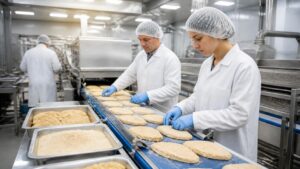
Idan Foods offers franchises custom breading formulas with locked specifications. Our services include formulation, batch testing, and HACCP-compliant manufacturing to remove the variability that plagues multi-unit consistency. We provide reverse engineering services for systems that want to duplicate and lock existing formulas that don’t translate well.
For franchise systems ready to turn breading from a fluctuating cost into a locked competitive advantage, the return on investment depends on evaluating the cost of current inconsistency and the upside of locking breading formulas.
Contact us for a breading quote, and we’ll lay out the steps to go from variable to consistent, and from inconsistent to guaranteed coating quality in your franchise.