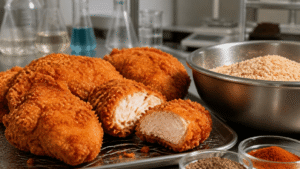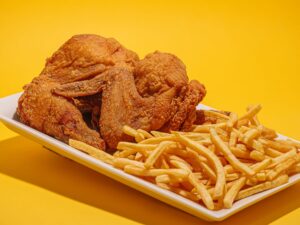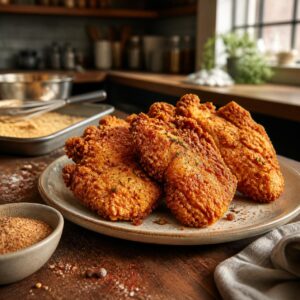

If you’re looking to make an impact with the best Nashville hot chicken, you’ll also need the best custom chicken breading to handle the heat. Many menus offer “Nashville hot,” but what they actually have is more of a system than a recipe. Brine, breading, fry profile, and heat levels that range from manageable to “pass the milk!”
When that system fails, it won’t come in the shape of one colossal failure. Cracks will start showing in little, everyday problems. You already see these cracks in the odd complaint of soggy hot and extra‑hot orders, while mild heat is not brown enough.
Without a decent breading formula, the crew at the fryers will soon complain about the Nashville burning too fast. Guests experience that as an inconsistency. Disappointment with random heat levels, greasiness, soft breading falling off, or over-fried food will soon see your customers defect to your competition.
The mistake is often in thinking that issues with Nashville hot are a sauce problem. However, it is a breading issue first.
Why Do Heat Tiers Destroy Crunch?
There is just something special about ultra-spicy chicken. Most Nashville hot chicken is made the same way: normal or slightly spicier breading, then a dip or brush of oil packed with cayenne and other spices—seems pretty simple, right? But on a real line, it’s a sure-fire recipe for lost crunch and inconsistency.
Every extra wet step has three detrimental effects on your P&L:
- Rehydrates the coating and accelerates sogging, especially as delivery orders travel in a delivery bag.
- Introduces a manual, complex-to-standardize variable—how long the chicken stays in the oil, how heavily it’s brushed, how often the oil-spice mix is refreshed.
- Plays havoc with consistency between locations and keeps shifting as cooks “adjust” the heat to their own impression of what customers want.
The higher the heat, the harsher the hot oil is on the crust. Without a coating made to handle it, your hottest options could often be the softest and greasiest on the menu. If you want a heat tier that sells, you need a breading system engineered for it.
What Does a Custom Batter Manufacturer Create for Nashville Hot Breading?
The best Nashville hot breading isn’t just a regular coating with more cayenne. It’s formulated to solve three specific problems: crunch retention, burn tolerance, and repeatable heat.
A robust Nashville hot breading will generally:
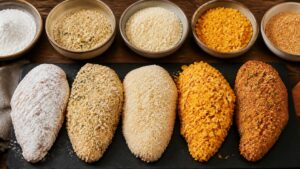
- Have a balanced starch system: wheat flour with selected starches that form a firm, low‑oil crust and slow the rate at which juice from the meat defects to the coating.
- Use a mix of fine, medium, and coarse crumbs to ensure a craggy crust that won’t lose crunch after a hot‑oil brush or dip.
- Standardize protein and sugar: enough to provide color but not so much that the coating burns at Nashville‑typical fry temperatures.
- Put the main flavors into the breading: paprika, garlic, onion, and chili, so every bite tastes right, even before the Nashville hot oil goes on.
It’s not easy to achieve all that with an off‑the‑shelf mix or a homemade blend that can change every time the staff opens a fresh bag. Multi‑unit operators and processors usually do this with a custom bread manufacturer that can incorporate those variables into a proprietary formula and reproduce it perfectly in each batch.
When you finalize the breading, you turn Nashville hot from an art project into a controllable system.
Where Is the Most Heat: Embedded or on the Surface?
For a scalable Nashville hot, the main question isn’t “How hot can we go?” It’s “At what step do we add the heat?”
You have three options:
- In the meat: brines or marinades that add some heat from within.
- In the coating: spicy breading that produces a steady heat in every bite.
- On the surface: the classic Nashville hot-oil-and-spice finish.
Lineups that force almost all the hot-flavor oil steps are the most challenging to keep steady across locations. Each pot of oil drifts in concentration during a shift, and each line cook has their own idea of what “medium” should be.
A more repeatable approach means starting with moderate heat in the breading, where the oil finish creates the visible difference between heat levels:
- Mild: base Nashville breading only, or a very light oil brush.
- Medium: same breading, standard oil brush at a fixed spice inclusion.
- Hot/Extra‑Hot: same breading, same oil base, with incremental dry spice or a higher‑intensity blend added to the brush.
When the breading does more to hold everything together—crunch, adhesion, flavor—the final step becomes simpler. With these steps, you get heat tiers that feel dramatic to guests but are “just another day” in the kitchen.
How to Create a Heat Level That Doesn’t Destroy the Crunch
Whether you have five or five hundred locations, it’s advisable to design your Nashville hot with your kitchen in mind: shift change, training churn, and Friday‑night in‑the‑weeds realities. A practical approach looks like this:
- Start with one breading system. Decide on one breading that complements all Nashville heat levels, not just SKUs for mild, medium, and hot, to reduce shift errors.
- Get the hot oil base standardized: Design the oil-and-spice base with your manufacturer, not on notes in the store. Settle on the rate of spice addition, the type of oil, and the refresh routine to avoid the concentration from drifting throughout the day.
- Confirm what each heat level should look like: Train on differences that staff can see: mild might be golden with a light sheen, medium a deeper red, and hot a dark, shiny coat with visible spice. Clear visual targets enable crews to self‑correct in real time.
- Protect the crust: Keep oil mixes as fluid as possible (more like a spiced oil than a thick paste). This consistency will reduce steam. Apply immediately after the fry, then give the chicken a short rest before boxing or serving so the crust can reset.
Test it in real service, not just in a lab. Run the breading through your own fryers, holding, and packaging at real volumes, then have your supplier tweak starch, crumb size, and seasoning so the crunch holds from order to first bite. Done well, the hot order should be just as crunchy and reliable as the mild.
Why Is a Custom Breading Partner Essential for Nashville Hot Chicken?
Nashville hot is no longer a short‑term LTO idea that you run for a month and forget. It’s become a permanent item on the menu, and visitors now come in knowing what they want to experience. They’ve tried it all, from national brands, products from broadline distributors, and social media suggestions. Of course, if your breading doesn’t turn out right, it’s not just a few reorders. You can tell by the increase in food waste, the additional training time, and regulars coming in less frequently because their “go-to” menu has become unreliable.
You don’t have to take that risk with a custom breading partner like Idan Foods. You don’t have to adjust the same in-house mix continually; you get a formula designed for your operation from the start! Our R&D team is on the ground with franchise systems, food processors, and independent concepts that want to make Nashville hot work across all stores, not just one.
So, what does that mean in reality:
- We create the right breading systems for the Nashville market that suit your fryers, desired hold times, and menu design.
- Our embedded heat and crunch retention is perfectly mild, medium, hot, or extra‑hot, so they rest on the same crunchy foundation.
- We ensure that the particle size and moisture control specifications remain the same from the first batch to the fiftieth, which is important whether it ends up in a test kitchen or store 100.
It is unlikely that yet another training session will solve your problems if you’re preparing to start a line for Nashville-hot that goes soft as it hits the heat. The true power lies in the bread system and its ability to integrate with your kitchen operations.
When you’re ready to create a tier of Nashville hot breading that your guests love and your crews can prepare on a frantic Friday night, reach out to Idan Foods and discuss your brand with our product development team to see how we can develop a custom Nashville hot coating system for you.