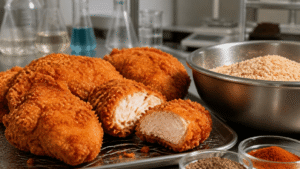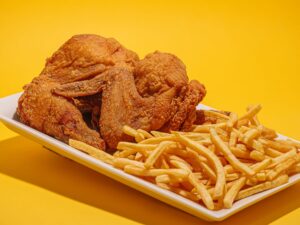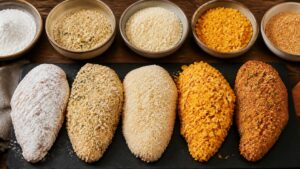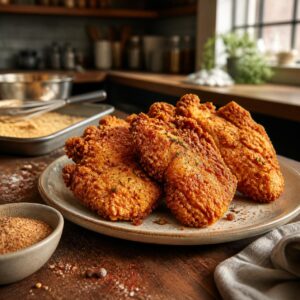

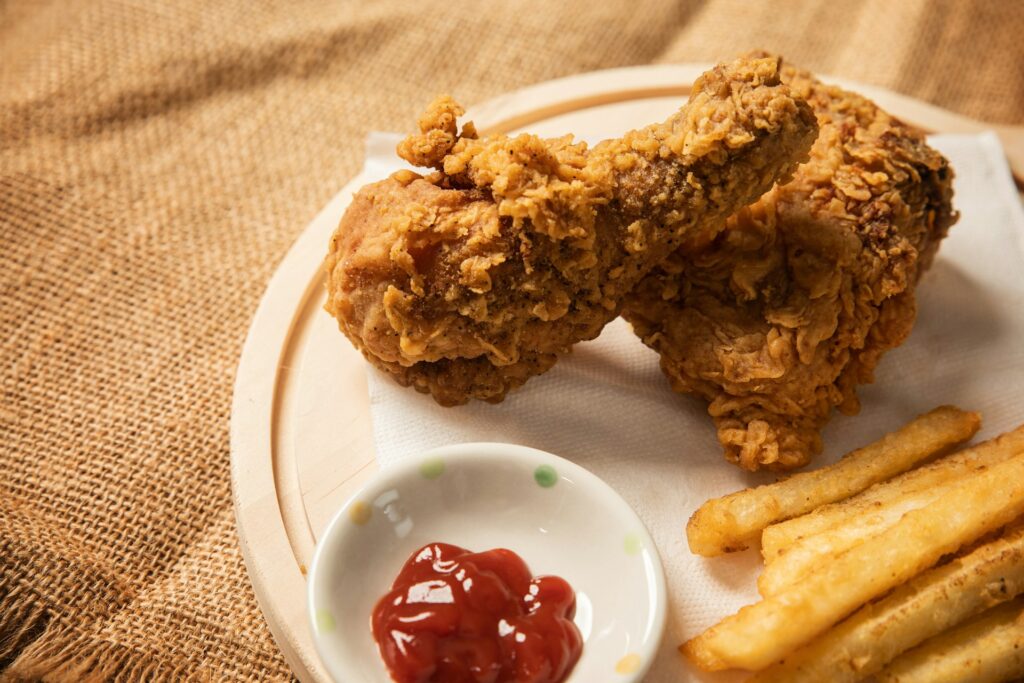
Halal fried chicken was once hard to find. It used to be that you could only buy it in specific neighborhoods. Yet, today, you can actually use it as a deliberate growth strategy for your food franchise.
When you create a certified, consistent, and kitchen-proof breading system, you can enter new trade areas. You could win new franchisees and partners. The formula is quite simple. Find a chicken breading supplier that handles Halal certification, can create custom recipes, and can provide more whenever you need it without slowing down your kitchens.
Why Does Halal Breading Show Up as a KPI?
Here’s how franchises and processors run their scorecards. Halal fried chicken breading directly affects your biggest business goals: making money, controlling costs, and maintaining consistent quality across every location.
- It brings in more customers: A clear Halal offer invites new guests who would otherwise completely skip your establishment for Halal chicken. That extra traffic directly lifts same-store sales and average unit volume. If your breading really tastes great, those guests will come back and bring their friends, too.
- It changes your food costs: Your coating drives oil absorption, product yield, and kitchen waste. All of that rolls straight into your food cost percentage, prime cost, and store-level margins. You need a stable Halal breading that holds up during drive-thru and delivery. Less soggy chicken means less food ends up in a trash can and fewer customers demand refunds.
- It indicates how far you can scale: Franchises and processors live or die on consistency. A locked-in Halal breading spec must behave exactly the same way across multiple sites and different co-packers. That uniformity is how you satisfy speed-of-service, quality, and customer-satisfaction targets across your entire network. Without it, some stores will always drop out of the program. When that happens, your growth in key trade areas completely stalls.
Halal breading isn’t just a religious or regulatory checkbox. It directly changes the exact numbers your operators already track every day: guest count, check size, food cost, and brand growth.
You face this pressure in three ways:
- Regional consistency: Fast-food franchise networks must maintain identical product standards across cities, landlords, and independent franchisees.
- Rapid scaling: Growing systems need to maintain the same product quality in every kitchen, even as they add dozens of new locations.
- Buyer demands: Private-label and distributor programs keep hearing the same question from buyers: “Do you have a Halal option in this slot?”
What Does Halal Really Mean for Your Breading Line?
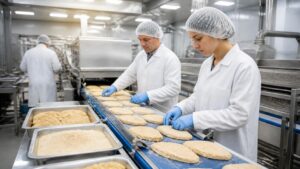
Many operations focus primarily on chicken and oil. The minute they get to the dry coating, they typically hit a wall. Breading and batter are integral to Halal systems and getting it certified. The Halal body will not only check what’s in the bag but also investigate how the bag is produced and stored, as well as its documentation.
For a U.S. dry-blend plant, that means:
- Every ingredient is affected. Flours, starches, spices, flavor carriers, leavening agents, and processing aids require verification. Anything animal-derived or alcohol-based must be understood and replaced where required.
- The facility process flow and layout are important. Halal and non-Halal products need clear separation or a validated sequence. Changeovers, cleaning procedures, and storage are part of the audit, not mere back-of-house details.
- Halal isn’t separate from your other food safety practices. It applies the same systems and paperwork you already keep for Hazard Analysis and Critical Control Points (HACCP) and audits. However, it adds a few additional checks for ingredients and process. When suppliers or recipes change, the HACCP and Halal files must be updated, not just one.
In cities like New York, state Halal rules of disclosure add another step. Those who advertise Halal food must show the records to prove it. Here’s where a cheap bagged mix will just not cut it. You need a batter and breading provider that understands Halal and its impact on every step of daily operations.
How Do You Choose a Halal-Capable Breading Partner?
If you only skim the websites of competing providers, all dry-blend suppliers seem equal. They all talk about quality and service. The thing is, you need to go a bit deeper with the Halal fried chicken breading. You need a partner who can answer three questions without hesitating:
- Do you use HACCP as your baseline and hold third-party certifications such as SQF or BRC? Did you build Halal straight into your regular safety checks, or is it an extra add-on?
- Which U.S. Halal certification bodies do you actually deal with? Show me your direct experience handling their audits, paperwork, and export rules for coated foods.
- Can you develop a unique chicken breading formula that stays ours legally, whether we are a chain, processor, or brand owner? Also, do you have the production capacity and flexible order minimums to handle our tests, big promotions, and long-term growth?
Idan Foods truly embraces this specific role. We handle both product development and high-volume manufacturing. First, we formulate the exact batters, coatings, and seasonings you need. Then, we produce them at scale. This combination allows franchise systems and food processors to control their coating process rather than managing an unpredictable variable.
How Can You Build and Lock a Custom Halal Breading System?
A strong Halal breading program starts with a clear brief. You explain how you want your chicken to taste and feel, how your kitchens run, and what you want from your brand over time. A skilled chicken breading manufacturer turns that into a system that works the same way every day.
The workflow usually looks like this:
- Outlining the target: We agree on volume, equipment, holding times, and delivery schedule together. We set your target crunch level, color, and Halal requirements.
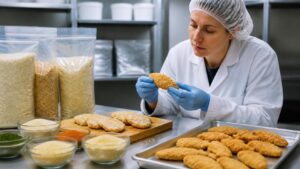
- Formulation and lab work: Our R&D team develops the pre-dust, batter, and breading. We adjust starches, leavening, and spices to meet your texture, flavor, and Halal stipulations.
- Operational testing: We test prototypes in your kitchens with your equipment. We check adhesion, crunch retention, oil absorption, and product yield. We then refine the formula.
- Formula lock and documentation: When you approve the formula, we lock it. We set conditions and quality checks. We complete the documentation required by the Halal certification authority.
- Scale-up and ongoing control: We move into normal production batches. We consult with you on minimum order quantities. We save your product samples and test results. We’ll always get your approval before we change an ingredient.
That way, when a new location opens for a chain, a new location opens, or a new co-packer comes on board, the breading performs as it did in the test kitchen.
How Do We Set Up Your Flavors to Work in Several Markets?
A Halal fried chicken offer that works in one area can struggle in another. You don’t need a different formula for every store. You need one system that can support a few planned variations.
A typical setup might look like this:
- A core coating system that delivers the crunch, color, and yield you want on every product. You want a product that will become your main breading for sandwiches, tenders, and bone-in pieces.
- Regional or concept versions built on that base, like a Texas-fried chicken breading profile with more paprika and chili, a milder Southern profile, or a herb-forward version for specific menus.
- Heat levels that range from kid-friendly to hot chicken, without changing kitchen steps. Mild, medium, and hot all use the same base, with heat adjusted through controlled spice blocks.
Because one bread-and-batter-blending company manages the range, you keep training, inventory, and QA simple while still offering a variety of flavors.
How Can You Design Halal Breading for Drive-Thru and Delivery?
Most fried chicken problems happen right in your kitchens. Think about fryer recovery times, holding windows, oil life, and staff labor. Halal adds extra rules to follow. Your coating must hold up through it all.
When we develop a coating at Idan Foods, we focus on three practical aspects:
- Crunch over time: How does the crust look and feel after being kept in a box or a bag? It has to stay crispy during a standard delivery trip.
- Oil use and yield: How much oil does the breading soak up during your standard fry time? That number dictates your real cost per serving when you’re pushing out high volume.
- Forgiving application: Kitchen workers make mistakes. The breading needs to work well even when the process isn’t perfect, so your guests never notice a difference.
Fixing these issues during development means your team gets a Halal breading that works just as well in a busy kitchen as it did in the test lab.
Turning Halal Breading Into an Advantage
When handled well, Halal fried chicken breading becomes an advantage rather than just another requirement. A locked, certified system from a focused chicken breading manufacturer lets you:
- Enter new trade areas with confidence that your offer meets Halal expectations and still feels familiar to the wider market.
- Give franchisees, co-packers, and distributors a coating program that’s easy to train, easy to audit, and hard to copy.
- Extend your flavor and coating IP into seafood, snacks, and private-label dry-blending without starting from scratch each time.
Partner With an Experienced, Reliable Halal Breading Provider
At Idan Foods, we focus on custom chicken breading, batters, and seasonings that can travel and scale with your system. If you want Halal to support growth rather than limit it, the next step is to talk through where you are now and what you want your coating system to achieve over the next few years. Give us a call; we’d love to hear from you.