What Must You Include in a Custom Breading RFQ?
The first real step in a custom breading project is generally the Request for Quotation (RFQ). However, far more than asking for a price, it’s the beginning of a brief. It needs to give Idan Foods the context to identify which questions to answer before development begins. It provides context and suggests an approach.
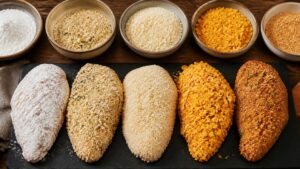
An efficient RFQ explains to us what you want to make, how you plan to make it, and what you need the finished product to do. We develop our custom batters and breadings for food service around your product, process, and desired eating experience. It matters because breading is not one-size-fits-all. A coating for a thin chicken strip has different demands from a coating for a large fillet, a seafood portion, or a breaded vegetable piece. The cooking method, target texture, flavor profile, volume, and packaging all shape the final formulation.
A brief inquiry can still start a conversation. But it often leads to follow-up questions, delays, and samples that miss the mark. A clear RFQ gives us a stronger starting point. This guide explains what to include in a custom breading RFQ and why every detail matters.
Start With The Product
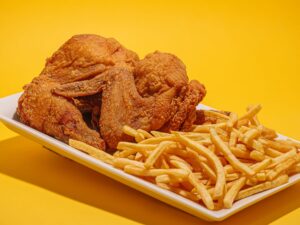
The first section of an RFQ should explain the product itself. What food will you coat with the breading? Is it chicken, fish, shrimp, vegetables, cheese, or a plant-based alternative? What cut or format will it be used on? A breading for chicken tenders is not the same as a breading for a whole fillet, a nugget, or a fish portion.
Include the size and shape of the product where you can. A thin, flat piece may need a coating that cooks quickly and stays light. A thicker piece may need more structure, better adhesion, and a coating that can handle extended cook time.
It also helps to explain how you will prepare and serve the product. Will it be fried to order, held in a warmer, prepared for takeaway, or delivered? A coating that stays crisp for a few minutes may soften during a longer hold or delivery. We need to know how long the product must stay crisp before it reaches the customer. For example, a chicken tender served straight from the fryer may need a light, crisp coating. A tender that sits in a warmer before it reaches the customer may need a coating that resists softening. A delivery item may need to hold its texture after time in a takeaway container.
It also helps to share the type of fryer and cooking conditions you use. A breading that works well in one kitchen may behave differently in another. The better we understand the product and how you’ll use it in your kitchen, the better we can tailor the blend.
Explain the Cooking Process
One of the most important details in any breading RFQ is how the product will be cooked and served.
For a foodservice operator, the key question is whether the product will be fried to order, par-fried and finished in the kitchen, or held before it reaches the customer. Each approach places different demands on the coating.
These details matter because cooking changes the coating. Heat affects color, crispness, moisture, oil uptake, and texture. A breading that looks and tastes great in a test fryer may not perform as well in a busy kitchen.
If the product will be fried to order, include the oil type, fry temperature, and cook time if you know them. Will the food be par-fried and finished later? Explain the par-fry process and how the product will be finished in the kitchen.
It also helps to share the type of fryer, cooking temperature, and holding conditions used in your operation. These details help us understand how long the coating needs to stay crisp and how it will handle heat, moisture, and time before serving.
This information helps us choose the right flour base, leavening system, seasoning level, and coating structure. It also helps us predict how the product will perform in your kitchen, not just in a test environment.
A breading needs to do more than look good when it comes out of the fryer. It needs to hold its color, crispness, and flavor through holding, takeaway, and delivery.
Describe the Eating Experience
This point is where the RFQ becomes more personal.
What do you want the customer to taste, see, and feel when they take a bite? Do you want a light, delicate crust or a thick, crunchy coating? Should the breading be mildly seasoned or packed with flavor? Do you want visible herbs and spices, or a clean base that lets a sauce carry most of the flavor?
Use plain language to describe your goal. You might say you want a golden color, a crisp bite, moderate salt, and a savory pepper note. You might want a Southern-style profile, a spicy kick, or a more neutral coating that complements several sauces.
You don’t need to use technical language. In fact, it’s often better if you don’t. What matters is that we understand your ideal result.
If you have a benchmark product, mention it. But be clear about what you want to match and what you want to change. You may like the crunch of a competitor product but want less salt. Perhaps you want a similar color but a cleaner ingredient statement. Maybe you want the same general concept but a stronger flavor profile. A good RFQ explains the destination, not just the starting point.
Include Technical Requirements
Technical requirements give us the project boundaries. Some buyers know exactly what they need. Others are still exploring. Either approach can work, but it helps to separate the non-negotiables from the preferences.
You might need a specific breading pickup, coating weight, color, crunch level, or adhesion performance. You may have targets for sodium, sugar, fat, calories, fiber, or protein. You may need the product to meet allergen, religious, dietary, or regulatory requirements.
If the product must meet a customer specification, retailer standard, or export requirement, make it clear from the outset. These details can affect ingredient selection, documentation, testing, and production planning.
It’s also useful to inform us of ingredients you want to avoid. For example, you may need to avoid specified allergens, artificial colors, or specific additives. Clear boundaries prevent wasted development time.
If you’re unsure about a technical target, share that with us. We can often help you understand the trade-offs. For example, reducing sodium may affect flavor balance. Increasing fiber may affect texture. A cleaner label may limit some functional ingredients.
The goal is not to have every answer on day one. The goal is to be honest about what you know, what you don’t know, and what matters most. Our R&D process starts with those same questions.
Ready To Request A Custom Breading Quote?
Use this guide to prepare your RFQ. Include your product details, cooking process, desired eating experience, volumes, packaging needs, and timeline. The more context you provide, the better we can understand your project and recommend the right approach.
Contact Idan Foods to discuss your custom breading project.