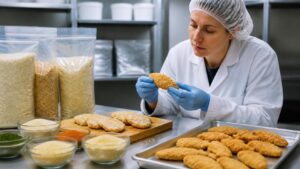

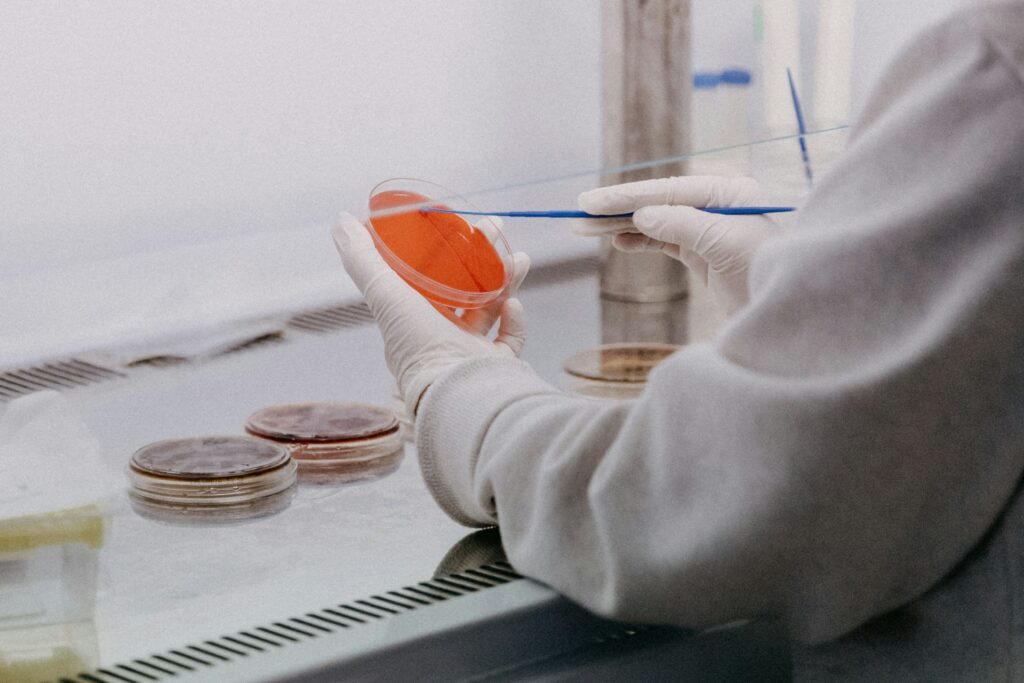
Many have imagined and hoped to design a special taste or ‘house seasoning.’ However, getting that into a product that tastes the same every time it’s made, whether in one kitchen or fifty, is a different challenge entirely. Most kitchens aren’t set up to solve that on their own.
That gap is where our R&D team comes in. Here’s what actually happens between your flavor brief and a bag of seasoning entering your fryer, mixer, or packaging line.
What Starts a New Seasoning Blend Project?
We don’t start with a spice list. At Idan Foods, your custom breading supplier, we begin with questions: What’s the flavor you’re after, and how do you want it to affect client experience? What’s the base protein or product the spice must cover? Do you use equipment to apply it, or do your line chefs hand-season? Is the protein tumbled in dry batter or dunked? And of course, how much do you need? One test run or sixty units before the end of next quarter?
The answers to those questions determine everything that happens next. If you have a flagship location, you can probably afford more delicate and rare ingredients. National expansion, however, needs to stand on pillar ingredients that are available all year. We identify the spice and formalize its availability before even weighing the ingredient.
How Do You Turn a Flavor Idea Into a Working Formula?
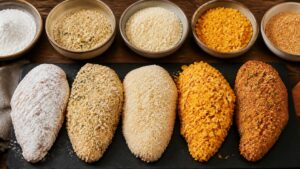
Our team combines a base ratio of salt, hot spice, aromatics, and acid, then adjusts from there. Few people know how important particle size is. A fine seasoning can taste flat or clump in humid conditions. Then again, a coarse particle won’t evenly cover a piece of chicken or a bag of chips.
We’ve produced breading systems that had to endure more than a dozen formulation adjustments before they could leave the lab, and seasoning blends aren’t different. We taste and measure against the original brief with each test. It’s slow, but that’s on purpose. Hurrying this step is where some clients end up with a great-taste explosion in week one. But by week six it’s completely unpredictable.
Why Does Testing in a Real Kitchen Matter More Than Testing in a Lab?
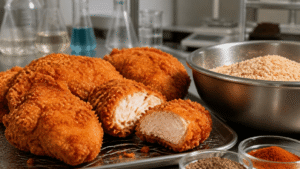
When a blend tastes great in a lab, it doesn’t mean it will do so on a real line. As soon as a test formula earns its way out of the lab, we put it through its paces in the client’s actual kitchen, on their own equipment, with their current staff applying it.
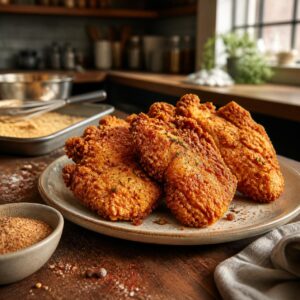
In your kitchen, we check that the seasoning sticks evenly without a binder. We monitor the heat level after 20 minutes under a heat lamp. Of course, we also test whether the flavor holds up during a normal Friday rush when nobody’s measuring with a scale.
This step also catches problems a lab can’t. One heat profile took us almost four months to get right. The first few batches either faded too fast or stayed on the tongue too long, and neither felt intentional to the tasters. We continued adjusting the pepper blend in small batches. Once the testers stopped mentioning the heat, we knew we’d reached our goal.
Getting a Blend Right Can Take Weeks or Months
Depending on how detailed the target is, a basic flavor extension of an existing product might be ready in a few weeks. On the other hand, a new blend that must evoke a precise, repeatable heat curve or a specific traditional flavor may need several months of iteration and customer feedback before it’s tied down. We’d rather spend sufficient time on testing and retesting than hand over a formula that requires rework after it’s already rolled out.
What Happens Once the Formula Is Approved?
Once a client signs off, we meticulously document the formulation. That includes ingredient ratios, particle-size specifications, mixing sequence, and quality checkpoints.
That written formula is what prevents flavor from changing ever so slightly over time. Without it, a co-packer could deviate from the formula by changing its paprika supplier. Next thing, the color shifts slightly, and six months later, nobody would know why or how the products stopped being what they should be. Whenever an ingredient needs to change, for reasons like cost, supply, or allergens, the client approves it first. With us, nothing changes gradually, quietly in the background.
How Do You Scale From a Test Batch to a Production Run?
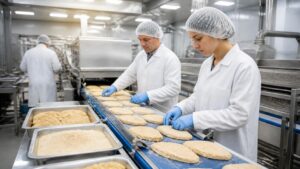
Our team runs several trials before doing a full production run. We adjust mix times and equipment settings until the blend matches the approved blend from testing. A formula that works in a five-pound test batch doesn’t automatically work in a five-hundred-pound run. Mixing equipment looks very different when large-scale turnover is necessary.
Heat generated during blending can affect volatile aromatics, and ingredient sourcing should shift away from smaller specialty suppliers toward providers that can guarantee consistent volume. Packaging gets decided here too: stand-up pouch, bag-in-a-box, or bulk tote, since it affects shelf life and how the seasoning holds up once it’s opened.
How to Keep a Blend Consistent Across Every Market and Every Batch
Consistency assurance is a never-ending process. We keep samples and test results on file for every dedicated, agreed-upon formula. We regularly check those records and flag any deviation from the formula before it even reaches a customer’s plate. For clients with several locations or multiple co-packers, this is the difference between a seasoning blend that tastes the same in every market and one that only works in the store where it was developed.
Partner With a Seasoning Manufacturer Who Actually Tests Before You Scale
At Idan Foods, we design and create tailor-made seasonings, batters, and breadings for chains and processors who need flavors that hold up beyond the first sample. If you’re working on a new seasoning blend or trying to fix one that’s already off, give us a call. We’d love to hear what you’re creating.
Frequently Asked Questions
How long does it typically take to develop a new seasoning blend?
It can take a few weeks for an uncomplicated flavor expansion, or several months for a blend formulated around a new flavor experience or a distinct heat curve. We believe in doing all the work up front and taking extra time during development if necessary, rather than reworking a formula after it’s already in production.
Can you match or improve on a seasoning we’re already using?
Yes. Reverse engineering an existing product is a common starting point, whether the goal is to match it exactly, fix a consistency issue, or improve flavor, cost, or shelf stability while keeping the profile guests already recognize.
Do you test blends across different equipment and application methods?
Yes. We test the application methods a client actually uses, whether they be blended, tumbled, or applied by hand. How a seasoning responds in a batter can vary, so we test the application method a client will actually use.