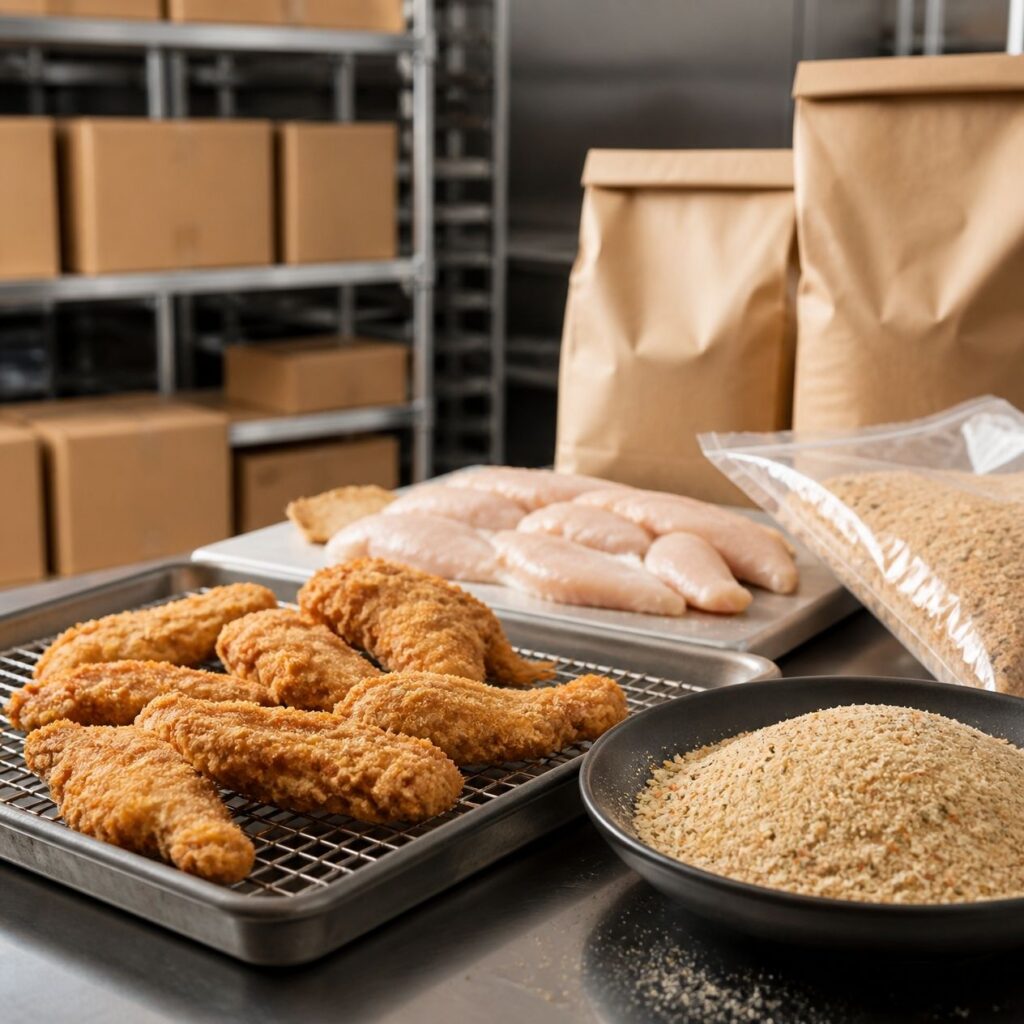
Private label breading lets foodservice distributors sell a coating system under their own brand. At Idan Foods, we develop the breading, match it to your customers, and support production, specification, and repeat orders.
A distributor does more than move product from a manufacturer to a kitchen. Distributors help operators solve problems. Those problems include inconsistent fry results, sauces that make coatings soggy, high waste, limited menu flexibility, and products that look different at every location.
Private label breading gives distributors a way to solve those problems with a product they own commercially. It also gives them more control over pricing, margins, customer relationships, and brand identity.
In this article, we explain how private label breading works, what it involves, and why it matters for foodservice distributors.
What Is Private Label Breading?
Private label breading is a coating system a distributor can sell under its own brand. We develop the breading to suit your target customers, applications, fry process, and commercial goals. You control the brand, while we provide formulation and manufacturing support.
Private label breading isn’t simply standard breading with a new bag design. It is a product built around a defined use case.
A distributor may need a breading for:
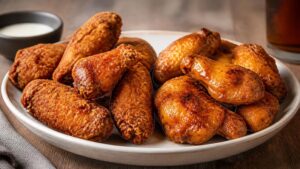
- Bone-in wings
- Boneless wings
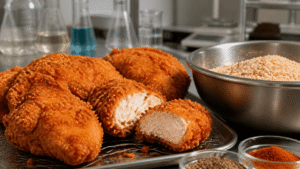
- Chicken tenders
- Chicken sandwiches
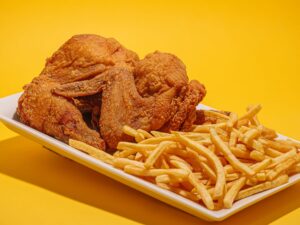
- Fried chicken portions
- Seafood applications
- Vegetable applications
Each application creates different requirements. A wing coating must hold sauce. A tender coating must stay crisp through a long hold, often under heat lamps. A sandwich coating must support a high-volume fry line. A seafood coating must manage moisture and adhesion. Private label breading turns those requirements into a repeatable product.
Why Does Private Label Breading Matter for Distributors?
Private label breading matters because it helps distributors offer a standout product. Instead of selling the same breading as everyone else, they can sell a product under their own brand. This can build stronger customer relationships, improve margins, and give distributors more control over what they sell.
Foodservice distributors face pressure from both sides. Operators want consistent results and dependable supply. Manufacturers want volume, forecast accuracy, and clear specifications. A private label program helps a distributor manage both sides.
It creates differentiation
Many distributors sell similar chicken products from the same suppliers. Private label breading gives the distributor a product competitors cannot simply reorder from a catalog. The difference doesn’t have to be dramatic. A distinct seasoning profile, coating texture, fry color, or sauce-holding performance can separate the distributor’s product from a generic option.
It supports better margins
A private label product gives you more control over its commercial position. As a distributor, you can price the product based on the value it delivers, not only on the cost of the raw material.
That value can come from better coating pickup, lower cook loss, improved yield, longer crisp retention, and fewer remakes. It can also come from stronger brand recognition, which makes the product easier for sales teams to recommend and for operators to reorder.
A higher-cost breading can still be the better commercial choice when it reduces waste or improves guest satisfaction.
It deepens customer relationships
When a distributor helps an operator solve a frying or coating problem, the relationship becomes more than a supplier transaction. The distributor becomes a partner in menu development. That makes it harder for the operator to switch based on price alone, because they have already invested time in testing, training, and standardizing the product.
It builds distributor recognition
Private-label breading carries the distributor’s name. Every successful fry, delivery order, and repeat purchase helps operators recognize and trust that name.
Over time, the distributor becomes known for a dependable chicken program, not just for supplying products.
How Does Private Label Breading Work?
Private label breading works through a structured development process. We define the application, develop the coating, test it in real conditions, set the specification, and support commercial production. We start with the finished product your customers want to serve, then build the coating around it. That approach gives the development team a clear target from the beginning.
Step 1: Define the application
We start by identifying the exact product the breading needs to support.
Breading for bone-in wings differs from breading for chicken tenders. The differences include coating pickup, adhesion, fry time, crisp retention, sauce compatibility, and appearance.
We consider whether the protein is bone-in or boneless, and how it will be cooked. We also confirm the sauce or seasoning, whether the product will be served immediately or delivered, the fryer equipment, and the expected batch size or production volume. These answers shape the development brief.
Step 2: Set the product targets
Private-label breading needs measurable targets.
We define targets for coating pickup, fry color, crunch, adhesion, oil uptake, cook loss, hold time, sauce compatibility, cost per pound, and finished portion appearance.
For example, a distributor may want a boneless wing coating with a 25% to 30% coating pickup, a golden fry color, and a crisp texture that lasts 20 minutes under a heat lamp. That target gives the development team something concrete to test against.
Step 3: Develop the coating system
We then build the breading around those targets.
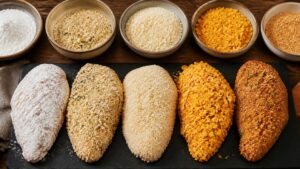
A coating system can include a pre-dust to improve adhesion, a batter to create a base layer and control texture, a breading to create the visible exterior, and seasoning to add flavor before the sauce or dip.
A simple system may use one seasoned breading. A more complex system may use a pre-dust, wet batter, and dry breading.
The right build depends on the desired bite. A light, craggy coating suits a hand-breaded look. A tight, even coating suits a standardized boneless wing. A thick, crunchy shell suits an indulgent fried chicken sandwich.
Step 4: Test in real conditions
Laboratory samples do not tell the full story.
We test the breading with the customer’s actual protein, fryer, oil, sauce, packaging, and service conditions. This step reveals issues that a basic fry test misses.
We evaluate adhesion before and after frying, fry color at the target time and temperature, crunch immediately after frying and holding, sauce absorption, oil uptake, cook loss, portion appearance, and consistency across batches.
A breading that performs well dry can fail after a wet Buffalo toss. A coating that looks good out of the fryer can soften in a delivery box. Real-condition testing prevents those surprises.
Step 5: Set the specification
A strong private label breading includes a clear specification.
The specification defines what the product is and how it should perform. It gives production teams, quality teams, and customers a shared standard.
A useful specification includes the product description, intended application, coating pickup range, fry temperature and time, finished color range, texture expectations, allergen information, packaging, shelf life, storage conditions, and quality checkpoints. The specification includes ranges, not only single targets. Production teams need room to operate without creating inconsistent product.
Step 6: Support launch and scale
After approval, we support the transition from development to commercial production.
That support can include production trials, quality documentation, packaging and fry-process guidance, training materials, troubleshooting, and ongoing product reviews.
A private label program succeeds when the product performs the same way at every production run and every customer location.
How Do We Choose the Right Coating Build?
We choose the coating build by starting with the bite you want, then matching the pre-dust, batter, and breading to create it. The right build balances texture, adhesion, coating pickup, fry performance, and cost.
No single coating build is best. A light hand-breaded wing, a standardized boneless wing, and a thick fried chicken sandwich each need a different approach.
Light dusting
A light dusting uses a thin layer of seasoned flour or breading. It suits applications that need a subtle coating, a visible protein surface, a quick fry process, or a lower-cost option. A light dusting can work well for grilled-style applications, roasted products, or lightly coated chicken pieces.
Seasoned breading
A seasoned breading uses a dry coating with built-in flavor. It suits wings, tenders, and fried chicken applications that need visible texture, consistent appearance, and strong sauce cling. This is often a straightforward option for operators that want flavor and texture without adding a batter step.
Batter-and-breading system
A batter-and-breading system uses a wet batter followed by a dry breading. It creates a thicker, crunchier coating with stronger adhesion and a more distinctive fried appearance. This build suits boneless wings, chicken sandwiches, tenders, and larger fried chicken portions.
Pre-dust, batter, and breading system
A full system adds a pre-dust before the batter and breading. It gives the strongest adhesion and highest coating pickup, while helping the coating manage moisture and stay durable. This build suits high-volume operations and products that face demanding fry, hold, or delivery conditions.
How Does Coating Pickup Affect Cost and Quality?
Coating pickup is the percentage of coating that adheres to the product. It affects portion weight, appearance, eating quality, fry time, oil uptake, and food cost. Coating pickup is one of the most important numbers in a breading specification.
A 25% pickup means a 100-pound batch of uncoated product gains roughly 25 pounds of coating. That added weight changes the cost structure and the finished portion size.
Too little coating can make the product look under-coated and uneven. It may not provide enough crunch, sauce coverage, or visual appeal. You may save money upfront, but the product may not deliver the eating experience your customers expect.
Too much coating can make the product heavy and dense. Fry time and oil uptake can increase, the protein-to-coating balance can suffer, and food cost can rise. More coating does not always mean more value.
The right pickup range balances appearance, texture, yield, and cost. We set a range, not a fixed number, because production conditions vary. Wing size varies. Batter viscosity varies. Fryer load varies.
A range gives operators room to produce consistently without sacrificing product quality.
How Does Breading Affect Fry Performance?
Breading affects fry performance through adhesion, moisture control, oil uptake, color development, and crisp formation. A coating must work with the fryer, oil, batch size, and cook time. Frying is a dynamic process because the coating changes as it cooks.
Adhesion determines whether the coating stays attached during handling, frying, and saucing. Poor adhesion can lead to coating fall-off in the fryer, dark crumbs in the oil, uneven product appearance, shorter oil life, and more waste. A pre-dust or batter layer improves adhesion in many applications.
As chicken cooks, moisture moves outward. The coating must manage that moisture without becoming soggy or separating from the protein. A well-designed breading creates a structure that supports moisture control while maintaining crispness.
The breading should also reach the desired fry color within the required cook time, form a crisp exterior, and avoid absorbing too much oil. Oil type, fry temperature, batch size, coating build, and fry time all affect the result. Crispness must form quickly enough for production, then hold through saucing and service.
How Does Breading Affect Sauce Performance?
Breading affects sauce performance by controlling how much sauce the product holds and how long the coating stays crisp. The coating and sauce must work as one system. A wing is not finished when it leaves the fryer. It is finished after the sauce, hold, packaging, and delivery process.
A textured coating gives sauce places to cling. A smooth surface lets sauce run off, while a craggy or ridged surface holds sauce in pockets and ridges. That creates a more indulgent, saucy bite.
Some sauces contain water, vinegar, butter, oil, or sugar. Each ingredient affects the coating differently. A thin Buffalo sauce can penetrate a coating and soften it. A thick BBQ sauce can sit on the surface but may become sticky during holding. The breading must match the sauce moisture, fat, acid, and sugar content.
The application method matters as much as the sauce formula. Operators can:
- Toss the product in sauce
- Brush sauce onto the product
- Glaze the product
- Serve sauce on the side
- Finish the product with a sauce drizzle
Each method creates a different coating challenge. A tossed wing needs a coating that handles full coverage. A brushed wing needs a coating that supports a lighter sauce layer. A sauce-on-the-side program needs a coating that performs well dry.
How Does Breading Affect Hold Time and Delivery?
Breading affects hold time and delivery by determining how long the coating keeps its texture after frying. A strong coating maintains crunch through heat, moisture, packaging, and transit.
Delivery changes the product. A wing that tastes excellent straight from the fryer can soften in a closed container as steam builds, sauce releases moisture, and the coating absorbs that moisture over time.
We test coated products after 5, 10, 20, and 30 minutes, assessing crunch, appearance, sauce distribution, sogginess, coating separation, package condition, and overall eating quality. This shows whether the product will hold up in real service conditions.
Packaging matters as much as the breading. A sealed container traps steam, a vented container releases some moisture, and a bag creates different pressure and heat conditions than a box. The breading specification should account for the packaging your customers actually use.
What Are the Benefits for Foodservice Distributors?
Private label breading gives distributors differentiation, margin control, customer loyalty, and a stronger position in the chicken category.
Commercial benefits
A branded coating gives distributors a differentiated product, more pricing control, and less direct comparison with standard catalog items.
Operational benefits
Clear specifications and consistent coating performance support better fry-process control, fewer complaints, and easier sales and operator training.
Menu benefits
One coating platform can support wings, tenders, sandwiches, fried chicken portions, and limited-time offers, simplifying procurement and creating more selling opportunities.
What Should Distributors Look for in a Breading Partner?
When choosing a breading partner, look for a team that understands foodservice operations, develops around the finished product, and supports the program after launch. Formulation ability matters, but operational support matters just as much.
Application knowledge and real-world testing
The right partner understands that a wing, tender, sandwich fillet, and fried chicken portion each need a different coating. We start by learning about your customers: the protein they use, the pickup they want, their fryer and oil, the sauces they serve, how long the product needs to hold, and whether it will be delivered.
A supplier that only asks for a flavor direction misses the operational details that determine whether the product works in a real kitchen.
We also test the breading under conditions close to the ones your customers face, including their fryer, oil, sauce, packaging, and service flow. A sample that performs well in a controlled kitchen does not always hold up during a busy dinner rush or a delivery order.
Clear documentation and scalable manufacturing
We provide a specification your production and quality teams can use, including measurable ranges, process guidance, allergen information, and quality checkpoints.
We also produce the same product at development scale and commercial scale. Once your customers rely on the program, consistency protects it.
Ongoing support
Launching the product is only the beginning. We stay involved as your customers use it, helping with production questions, customer feedback, specification updates, new flavor ideas, and new applications.
Chicken menus change, fry equipment changes, and sauce trends change. Your breading program should evolve with them.
How Does Private Label Breading Differ From Stock Breading?
Private label breading is developed for a defined distributor program. Stock breading is a standard product sold to many customers. The difference lies in ownership, customization, and strategic control.
| Area | Private label breading | Stock breading |
|---|---|---|
| Brand ownership | Distributor owns the brand | Supplier owns the brand |
| Formulation | Developed for a defined application | Made for broad use |
| Differentiation | High | Low |
| Pricing control | Greater | Limited |
| Customer relationship | Distributor-led | Supplier-led |
| Specification | Built around the program | Standardized |
| Competitive protection | Stronger | Weaker |
Stock breading has a place. It works well when speed, simplicity, and availability matter most. But private label breading works better when the distributor wants to own the customer relationship and build a differentiated chicken program.
How Does Idan Foods Approach Private Label Breading?
At Idan Foods, we approach private label breading as a finished-product development program. We start with the application your customers need, build the coating around it, test it under real conditions, and support you through commercial production.
We develop breadings, batters, coating systems, baking mixes, and seasonings for foodservice and multi-unit operators. Our seasoned chicken breading range includes flavor directions such as Classic Herb and Spicy Cajun, and we also customize products for restaurant and franchise programs.
A strong development conversation starts with the finished product. We consider the chicken cut, desired coating pickup, sauce program, cook method, and hold time. We also factor in delivery needs, operational constraints, and commercial targets before building and testing the coating system.
A private label breading program is not a recipe on a card. It’s a repeatable system that delivers the same result during a Friday-night rush, a delivery order, and every location in between.
Is Private Label Breading Right for Your Distribution Business?
Private label breading is right for distributors that want to differentiate their chicken category, control their brand, and build deeper relationships with operators. It works best when the distributor has a clear customer need and a commitment to consistency.
If you’re developing a private label breading program, contact Idan Foods to discuss a coating system built around your customers, applications, and distribution goals.