
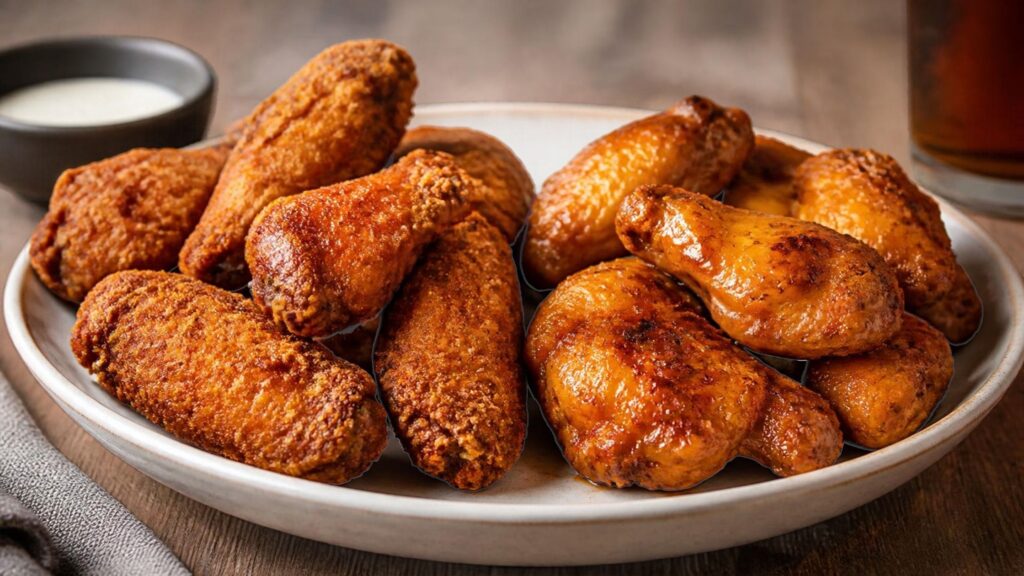
Breaded and naked wings may seem like a simple menu choice. But in a real kitchen, they’re two different items. They don’t have the same coatings, cooking times, or sauce-holding ability. They require different amounts of work and set various customer expectations.
Many successful wing menus offer both styles. Breaded wings satisfy the crunch craving and hold sauce well. Naked wings lead with deep, savory flavor and crispy skin. For any restaurant or food business, the real question isn’t which style is better. It’s which style goes with your current menu, how your kitchen runs, and your bottom line.
In this article, we’ll explain how each style works and how to choose and prepare breaded or naked wings so you get the same results every time.
The Core Difference
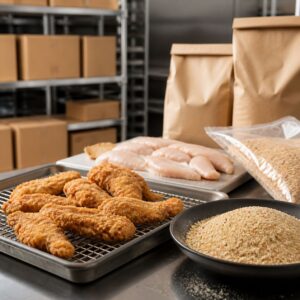
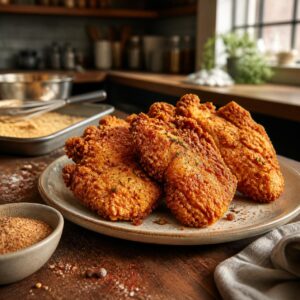
Naked wings are bone-in wings with skin only, with no breading or batter. They’re usually fried, grilled, smoked, or roasted, then tossed in sauce or a dry rub. Breaded wings get a coating before cooking. That coating can be a simple seasoned flour mix, a multi-step process with pre-dust, batter, and breading, or a full batter-and-breading system.
The coating affects more than texture. It influences portion weight, fry time, moisture retention, crunch, sauce cling, and, of course, flavor before the wing reaches the sauce. Neither style is automatically better. A poorly rendered naked wing can feel greasy, while a soggy or unevenly coated breaded wing can lose its crunch and appeal.
What Successful Wing Menus Serve
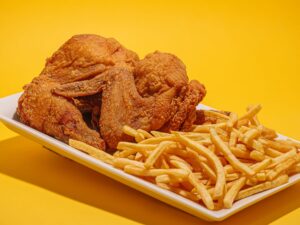
The most popular menus give guests more than one way to enjoy wings. Breaded wings deliver crunch, seasoning, and a coating that holds sauce well. Naked wings take a more traditional approach, focusing on crispy skin, rendered fat, and sauce coverage.
When Breaded Wings Make Sense
Breaded wings give you more control over the eating experience. The coating becomes part of the product, not just a surface treatment.
They deliver crunch
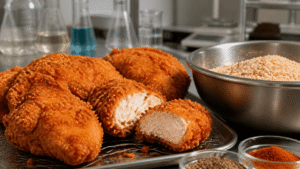
A seasoned breading creates a crisp, textured exterior. When you toss the wing in sauce, that coating holds sauce in its ridges and pockets. This coating makes breaded wings well-suited to glossy, heavily sauced dishes. The sauce clings instead of running off, creating the sticky, craveable finish guests expect from wing night.
They build flavor earlier
With a naked wing, the skin, sauce, rub, and cook method provide most of the flavor. With a breaded wing, seasoning can start in the coating. You can add herbs, heat, smoke notes, or savory seasoning before they go in the oil. That creates another flavor layer and helps the wing stay distinctive even after saucing.
They support high-volume service
Breaded wings can be more forgiving during busy kitchen service. A consistent coating helps create a more uniform appearance and hides small differences in wing size. A coating designed for crunch retention can also improve hold time. That matters for takeout, delivery, catering, and venues serving large batches during games or events.
They extend across the menu
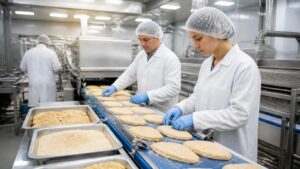
A breaded wing platform can support more than traditional wings. The same coating system may work for boneless wings, tenders, chicken sandwiches, or limited-time offers. For multi-unit operators, this can simplify procurement and training. One reliable coating system can serve several chicken items instead of requiring a separate process for each.
When Naked Wings Make Sense
Guests who prefer the chicken to lead, not the crunch, usually prefer naked wings. Skin render, char, smoke, and sauce coverage become the main features.
They offer a simpler product story
A naked wing shines on its own without breading, batter, or an added coating system. It offers a cleaner ingredient story and gives operators more versatility to decide whether the item is grilled, smoked, roasted, or fried. It can also support a more traditional Buffalo wing. The focus stays on the chicken, the sauce, and the cook method.
They let sauce take center stage
Without a coating, sauce sits directly on the skin. Guests who want a wetter, more intense Buffalo-style wing often prefer that direct coverage. A naked wing can deliver plenty of sauce in every bite, especially when the skin is crisp and the sauce is applied carefully.
They suit grilled and smoked menus
Naked wings work well on smokers, rotisseries, and grills. A breaded coating can burn, turn sticky, or lose texture under those conditions. Grilling naked wings after saucing can also add char and deepen the sauce flavor.
They can suit simpler dietary needs
Removing breading can make a wing easier to offer to guests avoiding gluten or carbohydrates. But don’t call a wing “gluten-free” unless your chicken, coatings, sauces, fryer process, and cross-contact controls support that claim.
How to Spec Breaded Wings
“Breaded wings” isn’t a complete specification. A light dusting, a crunchy seasoned breading, or a thick batter system produces very different results.
Define the coating build
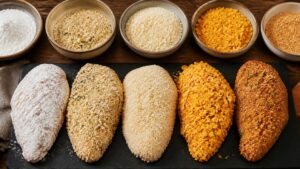
Start with the bite you want. Do you want a delicate, craggy crust, a tight, even coating, or a thick crunchy shell? That answer should drive the breading specification.
Will you use a seasoned dry breading, a batter-and-breading system, or a pre-dust, batter, and breading method? Each option changes adhesion, crispness, oil uptake, fry time, and cost. A heavier build may create more crunch, but it can also make the wing feel dense or absorb too much oil.
Set a coating pickup range
Coating pickup is the amount of batter or breading that sticks to the meat. It’s usually measured as a percentage of the wing’s weight. Coating pickup affects eating quality, appearance, and food cost. Not enough coating can look skimpy and fry unevenly. Too much can make the wing heavy and slow the fry.
We can work with you to set a practical pickup range and develop a chicken breading that suits your wing size, fry process, and sauce program. Then we test it using your actual wing size, fryer, oil, and sauce program. A strong spec includes an acceptable range, not only a target. Your production team needs room to operate without creating inconsistent product.
Match the coating to the sauce
Sauce choice should influence breading design. A thin Buffalo sauce needs a coating that absorbs moisture without turning soggy. A thick BBQ or honey-based sauce needs a surface that holds it without losing crunch.
Ask these questions during development:
- Should the coating stay crisp after saucing?
- Will it be tossed, brushed, or served with sauce on the side?
- Does the sauce contain oil, butter, vinegar, or sugar?
- Will the wing travel well in a delivery box or bag?
- How long will the meat hold under a heat lamp before service?
A breading that performs well dry may fail after a wet toss, so test the finished wing, not just the fried sample.
Control the fry process
Your spec should include oil management, oil type, fry temperature, fry time, batch size, and desired finished color. Each aspect affects how the coating sets, how much oil the wing absorbs, and whether the wing stays crisp after saucing.
Don’t rely on time and temperature alone. Fry time can change with wing size, coating pickup, batch load, and oil temperature. Create clear checkpoints so staff know how to judge the wing as it cooks and before it leaves the fryer.
- Check food safety first. Chicken wings must reach an internal temperature of 165°F to be safe for consumption. Use a calibrated thermometer and check the thickest part of the wing, avoiding the bone.
- Check appearance and texture. The coating should be evenly golden, fully set, and crisp without dark spots or too much oil pickup.
- Manage the oil. Filter or change it on schedule, skim out loose crumbs between batches, and replace oil that turns dark, smells off, or takes too long to reheat after cooling.
- Keep batch sizes consistent. Overloading the fryer drops the oil temperature and makes the coating absorb more oil. Set a maximum batch size and let the oil recover before the next batch.
For multi-unit operators, photos of acceptable and unacceptable product often communicate standards better than written instructions alone. Pair them with simple checkpoints so every location knows what “done” should look like.
Plan for delivery
A wing that’s perfect as it exits the fryer may go soggy in a delivery bag. If delivery is important in your business, test coated wings after five, 10, and 20 minutes in a closed container. Consider appearance, sogginess, crunch, and whether sauce leaks into the container. Packaging and venting matter here, just as much as the breading or sauce application.
How to Spec Naked Wings
Naked wings may seem simpler, but they need just as much discipline. Without a coating, small errors in render, seasoning, or sauce coverage become more obvious.
Start with the wing cut
First, decide whether you’ll serve whole wings, separate them into drumettes and flats, or use a mix. Also, set size specifications. A jumbo wing may look generous, but it can cook unevenly and complicate portioning. Consistent sizing usually beats maximum size.
Choose the cook method
You can fry, roast, smoke, grill, or finish wings with more than one method. Match your choice to your kitchen and brand. Frying supports fast service and classic Buffalo wings. Grilling adds char and a premium feel. Smoking builds depth for barbecue menus. Roasting or baking can suit operators who want to use less oil.
Season in stages
Naked wings need seasoning at multiple stages. Consider a dry rub before cooking, a finish seasoning after cooking, and a sauce or glaze at service. Also pay attention to salt balance. A naked wing with under-seasoned skin can taste flat, even with a strong sauce.
Get the skin right
Fat rendering is the difference between an excellent naked wing and a letdown. The skin should be crisp or pleasantly browned, not rubbery or flabby. Control the factors that affect consistency, including starting wing temperature, fry temperature, batch size, oil condition, resting, and sauce temperature. Make sauce application intentional. Without a coating to hold the sauce, the application method matters. Decide whether to toss, brush, glaze, or serve the sauce on the side. Then document the amount per portion. “Toss in sauce” isn’t a specification.
Cost, Yield, and Pricing
Breaded and naked wings affect food cost differently.
- Breaded wings add coating cost, but the coating can also increase finished weight and create bigger-looking portions. That can support perceived value, especially for boneless wings.
- Naked wings avoid coating cost, but they rely more on chicken quality, cooking skill, and sauce quality. A premium naked wing can justify a higher price only when guests can see and taste the difference.
- Cost the full plate, not just the raw wing. When costing either style, include raw wing cost, coating or batter cost, oil absorption, cook loss, sauce cost, packaging, labor, waste, and remakes. A slightly higher-cost breading that improves yield, consistency, and guest satisfaction may be the better commercial decision.
Which Style Should You Choose?
Use your concept, kitchen, and guest experience to make the call.
Choose breaded wings if your brand leans toward crunchy, saucy, indulgent chicken. They’re especially strong for delivery, sports bars, family dining, and menus that include boneless wings or tenders.
Choose naked wings if your brand emphasizes Buffalo tradition, grilled flavor, smoke, simpler ingredients, or premium chicken. They work well for barbecue concepts, craft wing menus, and guests who want the chicken itself to lead.
If wings are central to your business, a balanced menu may include both: naked bone-in wings for Buffalo and grilled flavors, breaded bone-in wings for a crunchy signature item, and breaded boneless wings for an easier eating experience.
How Idan Foods Can Help
A wing coating should solve a defined problem. It might need to improve crunch retention, support a signature flavor, reduce variation across locations, or create a recognizable wing guests remember.
Idan Foods develops custom solutions for breadings, batters, coating systems, baking mixes, and seasonings for foodservice and multi-unit operators. Our seasoned chicken breading range includes flavor directions such as Classic Herb and Spicy Cajun, with customization available for restaurant and franchise programs.
The right development conversation starts with the finished wing. We look at the chicken cut, desired coating pickup, sauce program, cook method, hold time, and operational constraints. Then we build and test a system around those needs.
A strong wing spec isn’t a recipe on a card. It’s a repeatable system that delivers the same guest experience during a Friday-night rush, a delivery order, and every location in between. If you’re developing a breaded wing program, contact Idan Foods to discuss a coating system built around your chicken, sauce, and kitchen.