
Sometimes a food business already has a preferred breading or seasoning but needs a new manufacturer. The original supplier may no longer be available, the product may have been discontinued, or the business may need a formula that performs better at scale. That’s where reverse engineering comes in.
Reverse engineering is the process of studying an existing product to understand its flavor, texture, appearance, and cooking performance, then creating a new formula that closely replicates it. For a breading or seasoning manufacturer, it’s not just about copying an ingredient list. The goal is to recreate the overall eating experience.
We’ll examine the finished product, assess it under real cooking conditions, identify the ingredients and processes likely responsible for its characteristics, and develop trial blends. We then refine those blends until the updated version performs as closely as possible to the original.
This article explains how reverse engineering works, what information helps the process, and what a food business can expect from a manufacturing partner.
Why Businesses Reverse Engineer Breading and Seasonings
Food businesses usually turn to reverse engineering for practical reasons. A recipe may work well in a small kitchen but become difficult to manage at commercial scale. A supplier may change an ingredient, discontinue a product, or become unable to meet demand.
Reverse engineering is also useful when a business wants to reduce costs, adjust ingredients, improve consistency, or move production to a new supplier. A restaurant chain may need to replace a breading that’s no longer available. At Idan Foods, we can develop a recipe in a test kitchen and scale it for production.
For breaded chicken, seafood, and vegetables, reverse engineering can be especially useful. A breading affects far more than flavor. It influences crunch, color, oil absorption, coating coverage, hold time, and overall cooking performance.
What a Manufacturer Studies First
Before creating a trial batch, we need a clear understanding of the target product. The more detailed the initial information, the faster and more accurately the development process can move.
Appearance
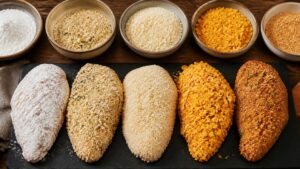
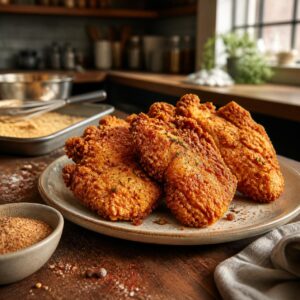
Appearance includes color, particle size, visible herbs or spices, coating coverage, and how the product looks after cooking. With a breading, we may examine the base color before cooking, the color after frying or baking, the size and amount of crisp flakes, and whether the coating is light, heavy, smooth, or craggy.
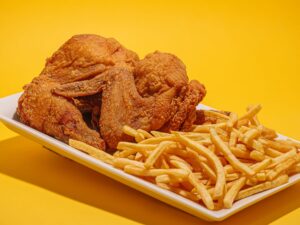
Color is especially important for fried chicken. Customers often associate a golden-brown color with flavor and crispness. A breading that tastes right but cooks too pale or too dark may not meet expectations.
Aroma and Flavor
Aroma provides the first indication of the seasoning profile. We check for garlic, onion, black pepper, paprika, herbs, chili, smoke, or savory notes. Some spices become more noticeable during cooking, while others fade or change character.
Flavor evaluation focuses on salt, sweetness, savoriness, heat, acidity, bitterness, and aftertaste. The goal is to identify the flavor drivers: the ingredients or ingredient groups responsible for the product’s most recognizable taste.
For a chicken seasoning, we may consider whether the flavor is bold or subtle, whether the heat builds gradually, and whether the blend is balanced or dominated by one ingredient.
Texture
Texture is one of the most important elements of a breading. You can judge a seasoning blend primarily by flavor, but a breading also has to deliver the right texture.
Our development team evaluates crunch, post-cook crispness, coating thickness, flake formation, adhesion to the food, and holding performance. A breading that is crisp out of the fryer but becomes tough after 20 minutes may not work for takeout or delivery. A blend that holds its crispness better may require a different flour, starch, or processing approach.
Cooking Performance
A breading has to work in the way you will actually use it. A blend that performs well in a deep fryer may behave differently in an oven, air fryer, pressure fryer, or conveyor fryer.
The R&D team considers how the product browns, crisps, absorbs oil, sticks to the food, retains moisture, and performs after freezing, thawing, and holding. Samples alone are not enough. We also need to understand how you cook the product and what matters most in the final result.
Information That Helps the Process
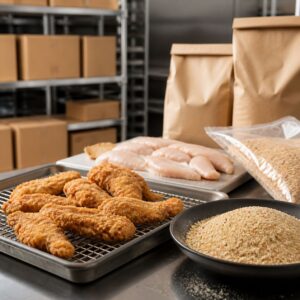
As your manufacturing partner, we can often work from a physical sample. But the project moves more smoothly when you provide context. Helpful details include a sample of the breading or seasoning, the cooking method and equipment, frying temperature and cook time, and the food being coated.
It also helps to know whether the product uses a marinade, batter, egg wash, or other binder. Let us know your desired color and crunch, spice tolerance, allergen and labeling requirements, batch size, packaging needs, shelf-life expectations, and budget.
You won’t always have the original formula, and that’s perfectly normal. Details about the cooking process can be just as important as the ingredient list. Two breading recipes with the same ingredients can produce vastly different results depending on whether they’re used with a wet marinade or applied to dry chicken. Moisture, fry temperature, cook time, and the food’s surface all affect browning, crispness, and adhesion.
The Reverse-Engineering Process
Every manufacturer has its own workflow, but most projects follow a similar process: assess the product, develop trial blends, test performance, refine the formula, and validate the final version. At Idan Foods, Woodland Gourmet backs our process with expanded ingredient and flavor capabilities.
Step 1: Define the Target Profile
The first step is to clearly define what the new blend needs to achieve. For example, the target might be a breading that develops a golden-brown color when fried, delivers a crispy and flaky texture, has moderate salt, offers savory flavor with visible black pepper, provides mild to medium heat, adheres well, and performs reliably in a commercial fryer.
A clear target profile keeps the project on track. It also helps avoid a situation where the new blend tastes similar but does not fry, hold, or coat the way you need.
Step 2: Analyze the Existing Product
Next, we evaluate the existing breading or seasoning through sensory testing, visual inspection, and cooking trials. We look for clues such as whether the breading produces large, flaky pieces; whether it browns quickly or slowly; whether it has a strong pepper or garlic character; and whether the salt level is high or moderate.
We also evaluate adhesion, crispness during holding, and oil absorption. These observations help shape our development hypothesis.
Step 3: Identify Ingredient Categories
We then identify the broad ingredient categories likely needed to recreate the product. A breading may contain base flours, starches, leavening agents, salt, sugar, yeast or yeast extracts, spices and herbs, onion and garlic powders, paprika, natural flavors, and anti-caking agents.
We always consider taste and function. Paprika contributes to color and flavor. Salt affects taste as well as moisture movement. Starches influence crispness, browning, and oil uptake.
Step 4: Create Trial Blends
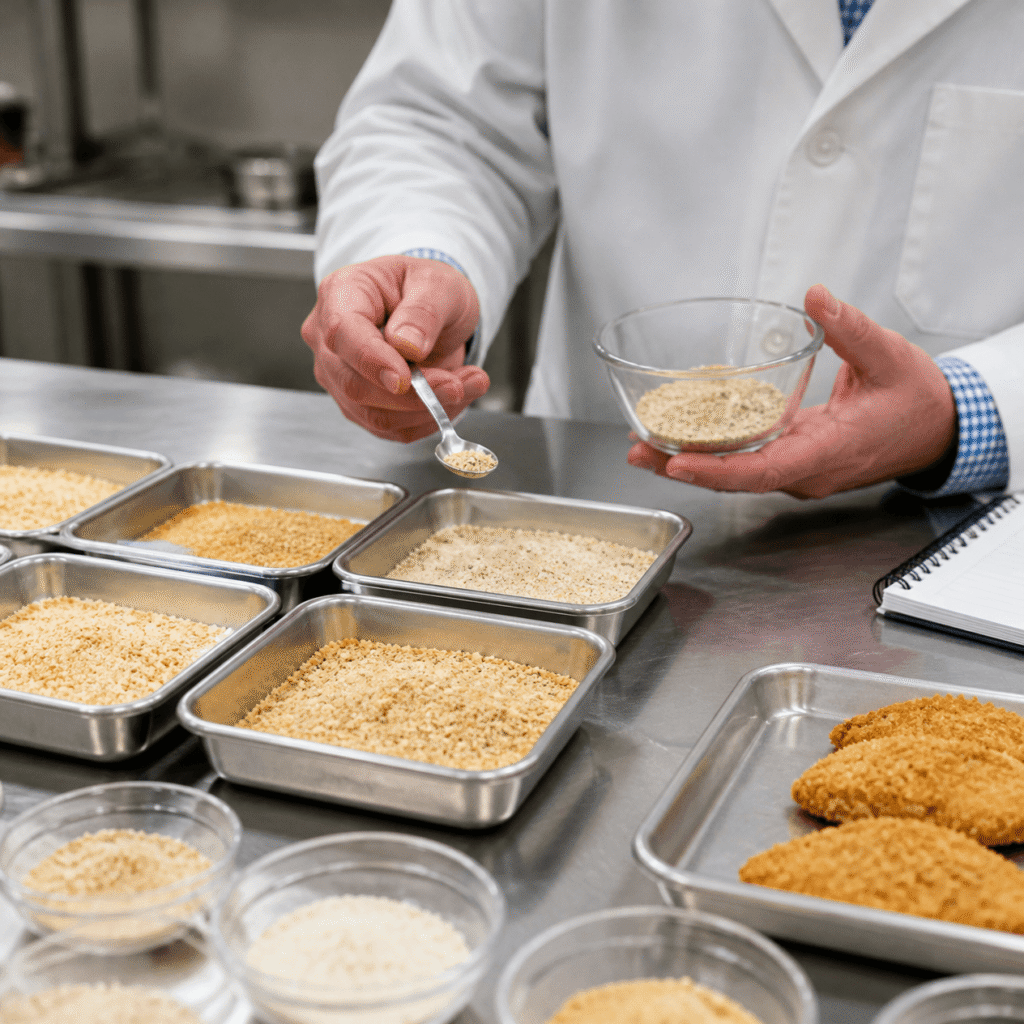
Once we have a working hypothesis, we create several trial blends. These early versions evaluate different approaches. One blend may focus on matching color, another on achieving the right crunch, and another on developing a seasoning profile with more savory depth or a different heat level.
The number of trials depends on the product’s complexity. A simple seasoning may require fewer variations than a breading system that must brown, crisp, adhere, and hold up during service.
Step 5: Test Side by Side
Side-by-side testing is one of the most important parts of reverse engineering. We run the original product alongside each trial blend under identical conditions.
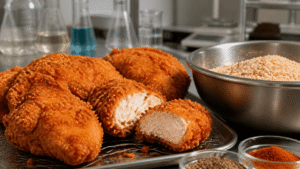
For a breading, this may involve coating identical pieces of chicken with the original blend and each trial blend, then cooking them at the same temperature for the same amount of time. Our team evaluates color, crunch, flavor, aroma, coating coverage, adhesion, oil absorption, and texture during holding.
One batch may have the right flavor but brown too quickly. Another may have the right crunch but taste too salty. Each result informs the next version.
Step 6: Refine the Formula
Reverse engineering is rarely achieved in one round. We adjust ingredients, ratios, particle size, and processing details based on the test results.
We may increase or reduce salt; adjust pepper, chili, garlic, onion, or herbs; change the flour or starch blend; vary particle size for more or less flake; or alter leavening for texture and browning. We may also improve adhesion.
The refinement stage continues until the blend achieves the required target profile.
Step 7: Validate the Final Blend
Once a trial version performs well, we validate it under conditions that reflect actual production. Validation may include larger pilot batches, repeated cooking tests, testing with different protein sizes, freeze-thaw testing, hold-time testing, packaging trials, and shelf-life evaluation.
This stage ensures the blend performs reliably in your operation, batch after batch.
What Makes Breading Different From Seasoning
Reverse engineering a dry seasoning and reverse engineering a breading are related processes, but breading adds functional complexity. A seasoning mainly needs to deliver flavor. A breading must deliver flavor and create a coating that performs during cooking and service.
Adhesion
The breading must stick to the food during handling, frying, and serving. If it falls off, the product loses crunch, flavor, and visual appeal.
Adhesion depends on the food’s surface moisture, marinades or binders, flour and starch selection, particle size, application method, frying temperature, and cook time. We need to understand the full coating process, not just the dry blend.
Crispness and Flake
Many breaded chicken products are valued for their crunchy, flaky texture. That texture may come from the blend’s flour and starch composition, particle structure, moisture interaction, and frying conditions.
Our development team determines whether the product needs a fine, even coating; a coarse, craggy coating; large flakes; a light crunch; or a thick, hearty crust. Each outcome may require a different formulation approach.
Color and Oil Uptake
Breading color comes from the ingredients, Maillard browning during cooking, and added color contributors. We balance color with flavor. A blend may brown beautifully but taste too sweet, too savory, or too spicy.
A breading also affects oil absorption. Too much oil can make the food greasy, while too little may leave the coating dry or pale. The right balance of flour, starch, and seasoning helps create a crisp coating with controlled oil uptake.
Hold Time
Restaurants, delivery services, and food processors need breaded products to remain appealing after cooking. A breading that becomes soggy too quickly may not suit a delivery menu.
We may test the product after short holding periods, longer warming periods, in takeaway packaging, after reheating, and through freeze-thaw cycles. These tests help confirm that the blend performs under real-world service conditions.
Common Challenges
Reverse engineering can be remarkably effective, but it isn’t always easy. If we receive only a small sample and no production data, we may need to make more assumptions, which can extend the development timeline.
The original product may also contain an ingredient that is unavailable, too expensive, restricted by labeling rules, or otherwise unsuitable for your requirements. In that situation, we need to find an alternative that achieves a similar outcome.
Another challenge is balancing multiple objectives. A new blend may have the right flavor but not the right crunch. It may have the right texture but lack the original aroma. We have to balance flavor, appearance, texture, adhesion, and cooking performance.
Scaling can also be a challenge. A blend that works well in a small batch may not perform the same way in a large mixer. Ingredient dispersion, mixing time, particle size, and moisture exposure can all affect the final product. Pilot testing is an important step in identifying these issues before full production begins.
How to Evaluate a Sample
When we send a sample, assess it under the same conditions you would use in your own kitchen. Tasting the dry blend by itself won’t show how it will perform in the real world.
Assess the sample using the same protein or food product, marinade or binder, coating process, cooking equipment, temperature, cook time, and holding or packaging process. Then compare it directly with the original product.
Check the color after cooking, crunch, coating adhesion, salt level, and heat level. Consider whether the flavor tastes familiar and if the product holds up well.
Clear feedback helps us fine-tune the blend. If a sample is “close” but not quite right, let us know what feels off; whether that’s color, salt, heat, crunch, adhesion, or overall flavor balance.
What to Look for in a Manufacturing Partner
A good blend manufacturer treats reverse engineering as a partnership. They should ask questions, understand your cooking process, and develop the blend around your priorities.
At Idan Foods, we assess the target product, build formulations around your needs, provide samples for testing, refine the formula based on your feedback, explain our ingredient choices, and scale production consistently. We also understand the importance of food safety, quality control, and the practical realities of a commercial kitchen.
For breaded chicken and coating systems, your manufacturing partner needs to understand how the blend behaves with marinades, proteins, fryers, and holding conditions. A breading that performs well in a bag is not necessarily the right breading on the line.
Idan Foods specializes in custom chicken breading, batter, and coating systems. We work with restaurants and food businesses to develop coatings to their exact specifications, with attention to flavor, texture, consistency, and practical kitchen performance.
Ready to Recreate Your Breading or Seasoning?
Reverse engineering an existing breading or seasoning is a structured development process. It starts with a clear understanding of the product you want to achieve and ends with a new breading or seasoning that delivers the required flavor, texture, color, and cooking performance.
The best results come through collaboration. We evaluate the product, develop trial batches, and refine the formula. You provide samples, cooking details, feedback, and final approval. For a food business, the benefits are considerable. A familiar product can continue without interruption, production can scale more reliably, and the final blend can be tailored to the operation’s exact needs.
Whether you need to replace a discontinued coating, improve consistency across locations, or develop a custom breading for a new menu item, Idan Foods can help turn your existing product concept into a dependable commercial solution. Contact us to discuss your breading or seasoning project and request a consultation.