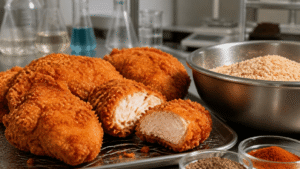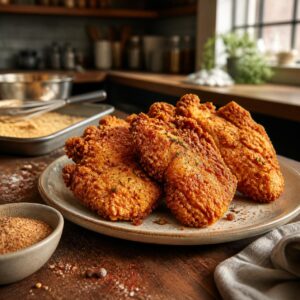

Walk into any fried chicken restaurant in America and you’ll notice something: no matter the city, the crunch is always the same. That’s not an accident. Behind that consistency is an entire operation most people never see: custom bread manufacturers who blend food science, strict safety protocols, and a bit of old-fashioned craftsmanship.
Scaling flavor is one thing. Doing it safely, every single day, is another story.
Where It Really Starts: The Ingredients
Everything begins long before the breading hits the fryer. Manufacturers start by choosing suppliers who can prove their ingredients are clean, reliable, and uniform. “You’re only as good as your raw materials” is a phrase you’ll hear often in the industry.
Every shipment of flour, starch, or seasoning comes with documentation, test results, certificates, and traceability reports. Even so, nothing is used until it’s inspected again in-house. Technicians open the bags, check the grind, test for moisture, and make sure it smells and looks right.
It’s a careful process, and yes, it slows things down. But that’s the point. Once those ingredients move into production, there’s no going back.
Mixing: The Heart of the Operation
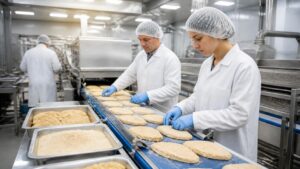
If you’ve never seen an industrial blending room, it’s worth picturing. It’s spotless, lined with stainless-steel equipment, and surprisingly quiet. Each batch is measured to the gram by automated systems that can detect the tiniest variation.
Even though machines handle most of the measuring, humans still play a considerable role. A veteran mixer can often tell at a glance whether a blend needs an extra second or two in the tumbler. That kind of instinct can’t be programmed.
And everything is traceable. Each batch gets a unique code so it can be traced back to the original flour mill if needed. In a world where one mistake can shut down a supply chain, that level of accountability is non-negotiable.
Food Safety Isn’t Optional
Food safety in this industry isn’t about checking boxes; it’s a culture. Facilities operate under strict programs like HACCP and SQF, which basically mean that every potential risk is mapped out and controlled before it becomes a problem.
That includes controlling air quality, monitoring room temperature, and continuously sanitizing equipment. If allergens like wheat or soy are involved, the production line is completely broken down, cleaned, and swab-tested before anything else is made.
There’s also a ton of recordkeeping. Every cleaning cycle, temperature reading, and microbial test is logged, not because regulators say so, but because clients expect it.
The Role of Quality Control
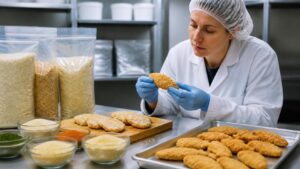
Quality assurance teams are the quiet heroes in this process. Their job is to make sure each batch performs exactly like the one before it, same flavor, same crunch, same color.
They draw random samples throughout the day, sometimes frying them right on the spot. If the coating browns too quickly or absorbs too much oil, adjustments are made immediately.
It’s repetitive work, but consistency is what restaurant chains are buying. A customer in Florida should get the same chicken experience as someone in Oregon, and that’s the result of thousands of small, controlled decisions made in a production room hours earlier.
People Over Machines
Technology can monitor, weigh, and record data, but people still keep the operation running smoothly. The best manufacturers train their teams constantly—not just in safety procedures, but also in awareness. Workers are encouraged to speak up if something looks off, even if it seems minor.
One plant manager once put it this way: “You can automate the mix, but you can’t automate pride.” That attitude is what separates a dependable producer from an average one.
Adapting and Improving
The truth is that the best manufacturers never stop adjusting. Consumer trends change, labeling rules evolve, and restaurants want new coatings that are gluten-free, clean-label, or crispier for delivery.
Behind the scenes, teams experiment with new ingredients, tweak ratios, and run pilot tests before a single pound ever ships. It’s a quiet kind of innovation: practical, data-driven, but creative too.
Why It Matters
Most people never think twice about who makes their breading. But for food producers and restaurants, that relationship is built on trust. If a product fails, the brand’s reputation takes the hit. That’s why food safety and consistency aren’t just buzzwords; they’re the pillars of the business.
So, the next time you bite into something perfectly crisp and golden, remember there’s a lot more behind it than flour and spices. There’s a whole network of trained people, tested systems, and countless small checks working together to make sure that crunch is the same every single time.