
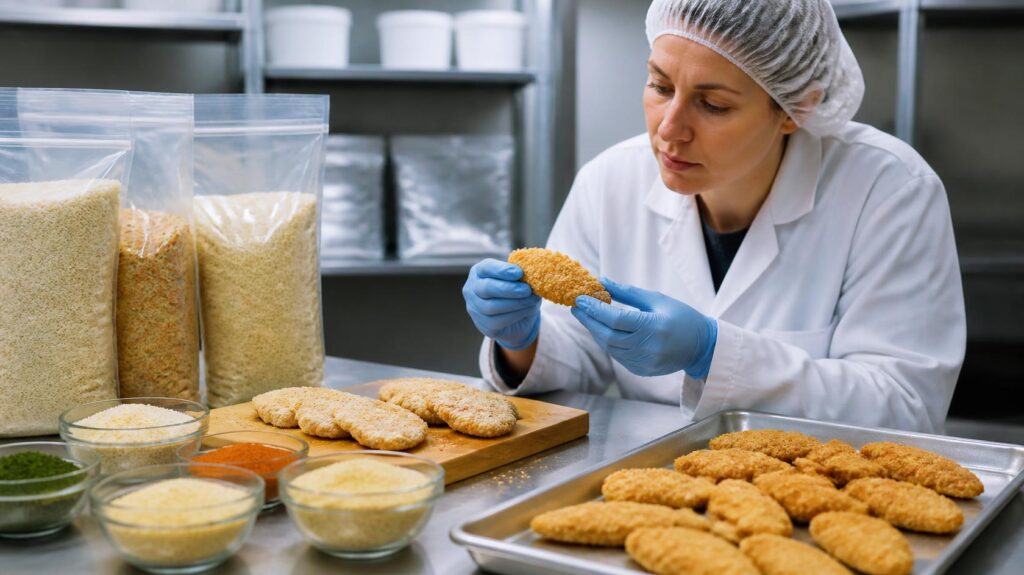
Most operators would think that changing a breading supplier is risky, especially for popular foods where customers expect a specific look, flavor, and crunch. Food brands are concerned about how even a small change in the coating structure will affect the product they’re known for.
Fortunately, you can switch breading suppliers without customers noticing if the new product looks and tastes just like the current one. Careful testing can help you improve consistency, supply reliability, and coating performance without changing the customer experience.
This article helps you approach change with confidence. It explains why operators generally consider switching suppliers and how to manage such a transition successfully. Let’s discuss how a custom chicken breading manufacturer can help create a reliable match for your brand.
Why Do Operators Change Breading Suppliers?
Brands change breading suppliers when their current one no longer fully supports them. These franchise operators often deal with stock shortages or late deliveries. Rising costs, changes in flavor, color, and coating performance can also require a change in breading supplier.
Growth is always welcome; however, an existing supplier may be unable to serve more than one outlet reliably. As the brand expands, it may require a provider that can meet growing demand, deliver on schedule, and provide more hands-on support.
Some franchises switch suppliers because they need a product that performs. They may want stronger coating adhesion, better crunch retention during delivery, a different spice profile, or a custom formula instead of a standard blend.
Start With the Product Customers Know
You cannot maintain customer experience if you can’t describe it. So, before searching for a new supplier, get to grips with what you’re already selling.
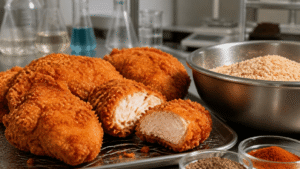
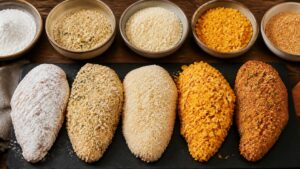
Start with the finished product. Take note of the color after frying and how the crust cracks when you bite into it. That’s your customer’s soft spot right there. Notice how thick the coating is and whether the particle texture is fine or coarse, flaky or smooth.
Then describe the flavor. Is it mild or spicy? Is it salty, or does it have a deeper savory taste? Does the flavor linger after the bite? These details may seem personal, but they give your coating formulators a useful starting point. An expert R&D team can turn those comments into workable changes to the formula.
Document how your kitchen team applies the breading. Do staffers dip the chicken in a wet batter before dredging it in dry coating, or do they use a dry-dredge system? Check how much wet or dry coating they use for each step. The application method affects how much breading adheres to the chicken and how the finished coating looks and feels.
How you fry the foods is also important. Note the oil temperature, how quickly the coating sets, how brown it becomes, whether it absorbs oil, and how much. The load in the fryer and the cooking time also affect how your ideal coating will be constructed. Your breading provider must test the new product under identical conditions in your kitchen.
Define What Must Stay the Same
Not every detail needs to match your current product. Decide which qualities customers expect and where the new supplier can improve the result.
It will be best to keep your signature flavor the same. The cooked protein should also have a similar color. If customers expect a certain bite or if the coating needs to stay attached during frying, those qualities matter too.
On the other hand, some details may not matter as much. The raw breading can look slightly different as long as the cooked chicken looks the same. You may also want a coating that stays crisp for longer during holding or delivery. This distinction gives your supplier a clear target. They’ll know which qualities to match and where they have room to improve the product.
Create a Clear Product Brief
Before reaching out to a new supplier, create a written brief of what you need. Explain what your current coating does well and what you’d like to improve. This way, your supplier has a clear target, and it supports sample testing.
Describe your finished chicken; don’t just focus on the dry mix. Note the color of the cooked product, the bite, flavor, and how well the crust sticks to the protein. If you offer a delivery service, explain how long the food must stay crisp in a bag.
It will help if you also clarify your kitchen process. Describe the type of protein, dredge or batter, marinade, fryer, cooking time, oil temperature, and typical size of a batch. This information will help the supplier create a breading that actually works in your operation, not only as a sample.
Separate your must-haves from areas where you’re flexible. Your signature flavor may need to stay unchanged, but you may need better hold time or easier application. With a clear brief, your breading supplier can match what’s already good and improve in areas where change is essential.
Work With the Right Supplier
You’ll want a new supplier to understand your product and do more than send samples from a catalog. A new supplier must understand your product and run tests in the same conditions as where you prep food.
Share a sample of your current breading with your potential supplier. Photos of the finished product can be helpful when texture and color are important. Also, include your preparation method and product specifications.
It’s ideal to provide samples from more than one batch to demonstrate current variations. Our custom breading development team can use this to create your signature blend, not just another generic chicken coating.
Match Flavor Without Losing Identity
The new breading should taste like your brand before it tries to taste better. A different formula can still provide the same eating experience when the balance of savory, salt, heat, and spices tastes familiar.
Make small changes for flavor improvement. A major change could affect a familiar menu item so much that it sends your regulars elsewhere. The protein, oil, marinade, cooking method, and coating method all affect the final taste. It’s safest to protect the central flavor and improve only what needs attention.
Protect the Crunch
The crunch is king when it comes to deep-fried breading. This is the ‘crave-factor’ that you don’t want to lose during a supplier change. You need a coating that doesn’t soften once it leaves the fryer. You also don’t want moisture from the protein soaking into the crust, which often happens in the delivery bag or in holding where steam affects the breading.
Test the new breading in your kitchen, using the same fryer, oil, batch size, and cooking time as the current product. Compare the new product with the current one right after frying and again after the usual holding or delivery time. This test will show whether it provides the same bite and stays crisp for as long as customers expect.
Review Quality Documents
The new product must meet your quality and food safety requirements before it reaches a customer.
Ask for the documents your team needs, such as the ingredient statement, allergen data, product specification, shelf-life details, and certificates of analysis. Don’t assume that two products with similar flavors use the same ingredients. Even a small formula change can affect labeling or allergen controls.
Plan the Rollout
A gradual rollout lowers the risk. Start with one location or one production line instead of changing every restaurant at once. Use the pilot to confirm that the new breading works during normal service. Watch the first production runs and collect feedback from the staff preparing the food.
Keep some of the current product available during the early stages. It gives you a backup while the new supplier proves that they can be consistent.
Before the rollout, store teams, buying, operations, and quality assurance need to know what’s changing. They’ll need one clear avenue where they can report problems. If the initial rollout performs well, you can expand the new product to a few locations. Monitor the results before completing the wider rollout.
Keep What Customers Crave
Choosing a new supplier doesn’t have to mean changing the food your customers love. With the optimal testing procedure, you can guard the familiar flavor and crunch while supply, consistency, performance, and quality improve.
If you’re looking for a reliable chicken breading manufacturer, an exclusive formula, and a top breading supplier for franchises, Idan Foods can help you explore the next step. The goal is simple: keep what people crave and make it better.
What Idan Foods Brings to the Process
Idan Foods has served operators in the fried chicken breading, seasoning, baking mix, and packaging industries since 1978. We use that experience to work with you toward an improved formula that keeps what’s unique about your offering, so your customers stay happy with their flavor, crunch, and look.
If you need an exclusive coating mix made for your brand, explore our custom chicken breading developed around your menu and kitchen process. We can address coating adhesion, spice level, or crunch retention during holding and delivery.
At Idan Foods, we offer support beyond the initial formula with custom product development, dry blending, production, packaging, and shipping. We remain your experienced partner as you move from the first sample to the full rollout. This approach helps you do more than replace one supplier with another. It helps you protect the product your customers recognize while giving your brand a more reliable path for growth.
You can also contact Idan Foods to discuss your current breading and the problems you want to solve. Send us your product requirements, and we’ll help you explore a reliable match that protects the flavor and crunch your customers expect.