
Core Insights:
- Breading consistency is a core franchise KPI because it directly affects brand perception, reviews, and repeat visits across locations.
- The main drivers of inconsistency are fragmented suppliers, in‑house mixing variance, and the lack of a locked, standardized formula.
- A custom, locked breading formula—produced under tight specifications and QA—turns your “best version” of the product into something reproducible in every store.
- Choosing the right supplier means vetting them on formula ownership, confidentiality, certifications, QA processes, capacity, and their ability to manage transitions and growth.
- Idan Foods partners with franchise groups to develop or reverse-engineer proprietary formulas, lock them into controlled production, and support multi-location growth with less drift and greater control.
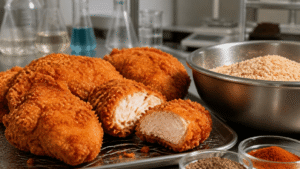
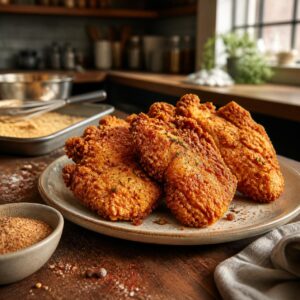
For customers, the specific location doesn’t matter much. What does matter is that the fried chicken tastes and crunches the same every time they order it. When breading consistency starts to slip, the impact shows up fast: more complaints, weaker reviews, more remakes, and fewer repeat visits. For most operators, that is the moment they realize they need to upgrade their chicken breading consistency franchise‑wide, not just in one store.
For franchise development directors and operations leaders, this is not just a kitchen concern. It’s a brand-control issue. This article explains why consistent fried chicken breading matters so much, what causes breading variation across locations, and how a locked custom formula can help stabilize quality as a franchise grows.
Why Chicken Breading Consistency Is a Franchise KPI
In a franchise system, consistency is one of the clearest signals of brand reliability. Guests in Phoenix expect the same crunch, color, and seasoning profile they got in Newark. That repeatability is part of the product they believe they’re buying. When the breading is too dark in one market, too salty in another, and soggy in a third, the brand starts to feel unreliable, even if the rest of the operation is sound.
That inconsistency creates a real business cost. A weekend dinner rush with a noticeable drop in product quality can trigger refunds, remakes, and negative reviews that live online long after the shift ends.
If even 10% of fried chicken orders at a handful of locations are affected by texture or flavor issues over a quarter, the margin loss adds up quickly. More importantly, repeat traffic takes a hit. Once leadership measures breading consistency with the same criteria it uses to measure speed of service, food cost, and labor efficiency, the issue stops looking like a recipe problem. It starts revealing what it really is: a system-wide performance metric.
What Causes Breading Variation
When breading performs differently from one location to another, the problem is rarely just one thing. In most franchise systems, the biggest causes are inconsistent vendor supply, variation in in-house mixing, and a lack of a tightly controlled formula. If one region sources from a different local supplier than another, even small differences in flour blend, grind size, starch content, or spice quality can visibly change the finished product.
Line cooks and prep staff in franchise kitchens working under pressure may scoop rather than weigh, skip a step in the process, or mix unevenly from batch to batch. On paper, the recipe is the same. In practice, one location may be running a noticeably different formula than another. Even a 5% variance in a key ingredient can affect flavor distribution, crust development, color, and hold time.
Over dozens of locations, those small inconsistencies become impossible to ignore.
The third issue is the absence of a locked formula. Where stores build breading from individual ingredients rather than receiving a finished blend with clear specifications, there is no reliable way to standardize particle size, seasoning distribution, adhesion behavior, or absorption rate. That’s why franchise systems relying on local sourcing and manual prep often see the widest swings in product quality.
How Custom Formula Locking Works
Custom formula locking starts with defining the exact fried chicken profile the brand wants to reproduce across every location. That usually means identifying the product version that performs best when everything goes right: the ideal crunch, the target color, the perfect seasoning level, the proper hold time, and the best fry behavior. From there, a technical team breaks the breading down into its functional components, including flour type, starches, leavening, spice blend, salt level, and particle size.
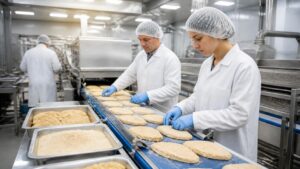
That profile is then tested and refined under controlled conditions. The goal is not simply to create a breading that tastes good in one store. The aim is to create consistent fried chicken breading that performs consistently across different crews, shifts, and markets. Once the formula is approved, it’s locked into a controlled production process with fixed ingredient specifications, blending protocols, and QA checkpoints. Every batch is produced to the same standard, removing a significant source of variability at the restaurant level.
Here’s where scale becomes manageable. Instead of asking every location to recreate the same result from raw ingredients, the franchise receives a finished dry blend that performs equally well in every kitchen. If the brand later needs an update, such as a slight heat adjustment or a regional variant, the change is made centrally and rolled out meticulously. The formula stays protected, documented, and reproducible.
In many cases, operators already have a breading profile they love in one market but cannot reproduce consistently elsewhere. That is where reverse engineering becomes valuable. A capable manufacturing partner can analyze the existing product, identify the flavor and texture drivers, and rebuild that profile into a proprietary blend designed for system-wide consistency.
What to Ask Your Supplier
Choosing a franchise breading supplier is about more than taste and price. The right partner should be able to support repeatable execution across your entire footprint. Start with formula ownership and confidentiality. If you’re developing a custom product, ask whether the formula is exclusive to your brand, how it’s documented, and what protections are in place to maintain confidentiality. If you’re switching from an existing supplier, ask whether the new partner can reverse-engineer your current bread recipe and manage the transition without altering the guest experience.
Next, ask operational questions.
- What are the minimum order quantities today, and can the supplier still support you when the system grows from 20 locations to 75?
- What quality checks are built into the production process?
- How often do they verify batch accuracy, moisture levels, particle size, and seasoning distribution?
- What certifications do they carry, and how does their QA process look when a batch falls outside spec?
- These are not minor details. They are the controls that protect consistency when volume increases.
Service levels matter too. Ask about lead times, regional freight coverage, on-time delivery expectations, and what happens when demand spikes unexpectedly.
You should also understand the onboarding process.
- How many test rounds are typical?
- What support is provided for kitchen training?
- How will operations, culinary, and technical teams communicate during rollout?
A strong supplier relationship should reduce operational friction, not add to it.
How Idan Foods Manages Franchise Accounts
At some point, most growing franchise systems realize that keeping fried chicken breading consistent across locations requires more than better store-level discipline. It takes a partner built for controlled formulation and repeatable production. We collaborate with franchise groups that operate multiple locations throughout the full breading lifecycle.
For a new franchise client, we usually start with an in-depth review of their current system. This appraisal often reveals inconsistent output between stores, trouble scaling a homemade recipe, or the need to match an existing breading during a supplier transition. From there, we develop or reverse engineer a proprietary formula tailored to your equipment, workflow, and the crunch and flavor profile you want guests to experience. That formula is then locked into our manufacturing system, with documented specifications, batch controls, and quality checkpoints, so that each shipment performs consistently across your network.
We also support the operational side of multi-unit growth. That includes service-level planning, freight coordination across regions, and clear procedures for handling deviations from spec. If you want to introduce a regional flavor variation without losing your core identity, we can manage that centrally as well. The result is a system that makes it easier to keep every location on spec and gives you a more reliable base to grow from.
What This Means for Your Franchise
When chicken breading consistencybegins to break down across franchises, the damage shows up in brand perception, store performance, and guest loyalty. The fix is not just better training at the unit level. It is a stronger system: a locked formula, tighter specifications, better QA, and a supplier relationship built for multi-unit execution. If your brand is ready to deliver the same crunch and flavor in every market, contact Idan Foods to discuss a custom formula for your franchise system.