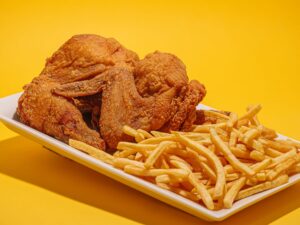

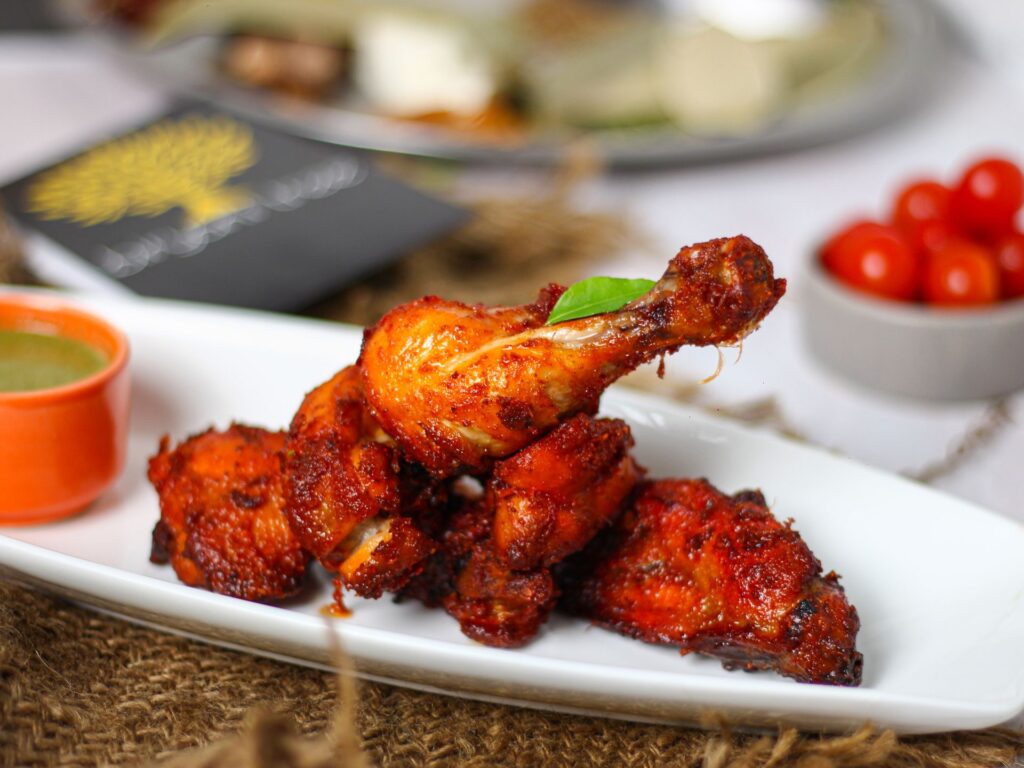
A few years ago, Khyber and tandoori fried chicken were mostly found in independent restaurants and regional chains. Today, those flavors are showing up on mainstream menus across the country, creating a real growth opportunity for franchise systems and food processors.
The catch is that these coatings are harder to scale than they look. A yogurt-marinated, masala-spiced crust behaves nothing like a standard Southern dredge, and most breading suppliers have never built one well. If you want Khyber or tandoori chicken on your menu that stays the same across outlets, you need a coating partner who has done this before. Here’s what that means for operators.
Why Are Middle Eastern and South Asian Flavors Showing Up on More Menus?
Because these flavors are in vogue, more people are asking for them, and they’re willing to pay even more when you deliver. For Middle Eastern and South Asian fried chicken flavors, think Khyber-style heat, tandoori spice, or a garlic-yogurt marinade, touch aspects operators already track every week: traffic, check size, and differentiation.
New guests show up for flavors they can’t get anywhere else nearby. Existing guests treat a well-made tandoori tender as a premium item, not a discount one, which boosts average sales without you touching your core menu. Also, in a market where every competitor already runs a hot chicken program, a Khyber-spiced item is one of the few ways left to stand out on a delivery app thumbnail.
There’s also a supply-side reason this is happening now. South Asian and Middle Eastern populations in the U.S. have grown steadily for two decades, and their food preferences don’t remain confined to their own communities for long. What starts as a “specialty” item in one neighborhood usually ends up on a mainstream menu within a few years. Chains that move early get to define the category. Chains that wait end up copying whoever got there first.
What Are Khyber and Tandoori Coatings, Really?
They’re two different flavor systems, and treating them as interchangeable is where most kitchens get into trouble.
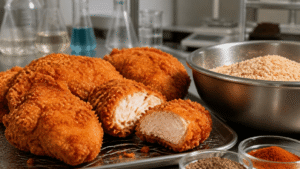
Tandoori-style coating starts with a yogurt-based marinade built around garam masala, ginger, garlic, and a blend of warm spices like cumin, coriander, and turmeric. Traditionally, tandoori chicken is cooked in a tandoor, a clay oven that reaches extremely high heat, charring the surface while keeping the inside moist. Adapting that for a commercial fryer means building a breading that can pick up the same char-and-spice character without an actual tandoor oven on the line.
Adapting that for a commercial fryer means building a breading that can pick up the same char-and-spice character without the tandoor itself, usually through a spice-forward dry coat layered over the yogurt marinade.
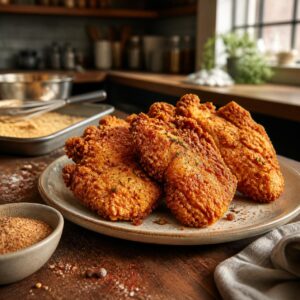
Khyber-style coating leans harder into heat and smoke, drawing on Peshawari and Afghan flavor traditions, like black pepper, chili, roasted garlic, and a deeper, earthier spice base than tandoori’s brighter profile. Where tandoori reads as warm and tangy, Khyber reads as bold and smoky. Both use yogurt or a wet marinade as a base. However, the finishing spice blocks are built for completely different flavor targets.
Get the two confused, or worse, use the same base blend for both and just swap a seasoning packet, and you’ll end up with two menu items that taste almost identical. Guests notice that fast.
What Makes These Coating Systems Different From a Standard Dredge?
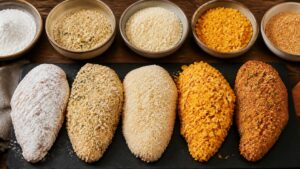
The wet marinade changes everything downstream. A standard house dredge is built to grip lightly moist or dry chicken. A yogurt-marinated piece is wet, tangy, and already carrying a heavy spice load before it ever touches the breading, and that changes how the flour needs to behave.
Three things go wrong when a kitchen tries to force a regular breading onto a marinated, spiced piece of chicken:
- The flour clumps unevenly across the wet surface, rather than forming a clean, consistent layer.
- The coating browns inconsistently because the sugar and dairy in the marinade caramelize faster than plain chicken skin.
- The base spice blend and the marinade spice blend fight each other rather than layer, so the final flavor comes out muddy rather than distinct.
A coating built specifically for this job solves all three issues at once. It’s engineered to grip a wet, seasoned surface evenly, brown predictably despite the marinade’s sugar content, and hold its own flavor identity without clashing with what’s already on the chicken.
How Idan Foods Builds a Custom Khyber or Tandoori System
We don’t start with a spice packet and hope it works. We start with a brief.
- Outlining the target. We talk through your volume, your equipment, your holding times, and what “authentic” actually means for your brand and your guests. Tandoori and Khyber both cover a lot of ground, so we nail down exactly where on that spectrum you want to land before we touch a single ingredient.
- Formulation and lab work. Our R&D team builds the marinade base, the pre-dust, and the finishing spice blend together, not as separate pieces bolted on later. We test how the yogurt or wet marinade interacts with the dry coat, and we adjust starches and spice ratios until the crust grips evenly and the flavor reads clean.
- Operational testing. We run prototypes in your actual kitchen, on your own equipment. We check adhesion on the marinated surface, browning consistency, crunch retention, and how the coating holds up under your specific fryer setup and hold times. Then we refine.
- Formula lock and documentation. Once you approve it, we lock the formula and document everything: spice ratios, marinade specs, quality checks, so every location and every co-packer produce the same result.
- Scale-up and ongoing control. We move into production, consult with you on order quantities, and keep samples and test results on file. If an ingredient ever needs to change, you approve it first. Nothing shifts quietly in the background.
That process is what distinguishes a Khyber chicken item that tastes the same in every market from one that only works in the store where the original recipe was developed.
Setting These Flavors Up to Work Across Multiple Markets
You don’t need five different formulas to run Khyber and tandoori chicken nationally. You need one well-built system with planned variation built in.
A typical setup looks like this: a core marinade and pre-dust base that handle the wet-to-dry transition consistently. Then flavor-specific finishing blocks are layered on top: tandoori’s warmer spice profile in one, Khyber’s smokier heat in another. Heat level can flex from mild to bold using the same base system, so your kitchen team learns one process, not two or three.
This also protects you regionally. A market with a large South Asian population might want a more traditional, spice-forward version. That said, a broader mainstream market might want the flavor dialed back slightly without losing what makes it recognizable. One coating system, built with that flexibility from the start, lets you serve both without running two separate supply chains.
Designing for Drive-Thru and Delivery
A great tandoori tender in a test kitchen means nothing if it turns soggy in a delivery bag or falls apart under a heat lamp. These coatings have to survive real kitchen conditions, not just taste good on day one.
We focus on three things when we build these systems for high-volume service. First, crunch retention: how the crust holds up over a 20- to 40-minute delivery window, since a wet marinade base makes this harder than with a dry-rub coating. Second, oil absorption: yogurt and sugar in the marinade can increase oil pickup if the coating isn’t engineered to manage it, and that number directly affects your cost per serving at volume. Third, forgiving application: your line cooks aren’t going to achieve a lab-perfect dip every time, so the system must perform even when the process isn’t perfect.
Solve those three in development, and you get a coating that performs the same at 6 pm on a Friday rush as it did in the test kitchen.
Turning These Flavors Into a Competitive Edge
Most chains treat regional flavors as a limited-time offer and move on. That’s a missed opportunity if the underlying coating system is solid.
A locked, well-documented Khyber or tandoori system lets you enter new trade areas with a genuinely differentiated menu item, not just another hot chicken variant. It gives franchisees and co-packers something easy to train on and hard for a competitor to copy, since the real work is in the formulation, not the marketing. And once you’ve built a coating system that handles a wet, spiced marinade well, that same platform can extend into other proteins and formats, tenders, sandwiches, even shrimp or paneer, without starting from zero each time.
Partner With a Breading Manufacturer Who Actually Knows These Flavors
At Idan Foods, we build custom batters, coatings, and seasonings for chains and processors who want Khyber, tandoori, and other regional flavors to work at scale, not just in one flagship location. If you’re ready to bring Middle Eastern or South Asian fried chicken to your menu the right way, let’s talk through what you’re trying to build and what it needs to hold up to. Give us a call; we’d love to hear where you want to take it.